
The New Geography of Asian Cricket: Power, Resources and the Triangular Contest for Talent
एशियाई क्रिकेट आज तीन धाराओं का संगम है — प्रशासनिक सत्ता, आर्थिक संसाधन और प्रतिभा का विस्तार। आर्थिक केंद्र स्पष्ट रूप से भारत में है: आईसीसी के 2024-27 चक्र में बीसीसीआई को कुल राजस्व वितरण का लगभग 38.5 प्रतिशत मिलता है। संस्थागत आधार 1983 में एशियाई क्रिकेट परिषद की स्थापना और 1984 के पहले एशिया कप (शारजाह) से बना। शारजाह ने 1980-90 के दशक में भारत-पाकिस्तान मुक़ाबलों के लिए तटस्थ मंच दिया और क्रिकेट का पहला वैश्विक बाज़ार गढ़ा। 1983 और 2011 के विश्व कप जीत ने भारत को आर्थिक शक्ति बनाया, और 2008 में आईपीएल ने फ्रैंचाइज़ी-आधारित मॉडल से अंतरराष्ट्रीय कैलेंडर तक बदल दिया। पाकिस्तानी क्रिकेट 2009 के लाहौर हमले के बाद अलग-थलग हुआ; 2016 की पीएसएल ने स्थिति सुधारी। 2012-13 के बाद भारत-पाक द्विपक्षीय श्रृंखलाएँ ठप हैं, और 2023 एशिया कप तथा 2025 चैंपियंस ट्रॉफ़ी में 'हाइब्रिड मॉडल' अपनाया गया — यानी मेज़बानी का अधिकार और खेलने का अधिकार अलग हो गए हैं। अफ़ग़ानिस्तान (2017 टेस्ट दर्जा, 2024 टी20 विश्व कप सेमीफ़ाइनल), नेपाल (2018 वनडे दर्जा) और ओमान/यूएई जैसी टीमों का उदय दिखाता है कि प्रतिभा का आधार चौड़ा हो रहा है, लेकिन फ्रैंचाइज़ी लीगों में पैसा कुछ ही देशों में केंद्रित है। भविष्य की तीन निर्णायक अनिश्चितताएँ: आईसीसी राजस्व वितरण में संतुलन, फ्रैंचाइज़ी लीगों के लिए वैश्विक खिड़की, और भारत-पाक गतिरोध का समाधान — जो किसी भी क्रिकेट बोर्ड के नियंत्रण में नहीं है। 2028 लॉस एंजिल्स ओलंपिक में क्रिकेट की भागीदारी एशियाई देशों के लिए नया वित्त पोषण और मान्यता का रास्ता खोलेगी।
Introduction: A continent that holds the sport's treasury
World cricket's economic centre of gravity no longer sits at Lord's. It sits somewhere between the Wankhede in Mumbai and the international stadium in Dubai. More than half of humanity lives in Asia, and Asia dominates the list of cricket-playing nations. In the ICC's 2026-27 revenue cycle, the Board of Control for Cricket in India receives roughly 38.5 per cent of the total distribution — a single number that explains where the money in this sport flows.
But the story of Asian cricket is not only a story about money. It is the intersection of three parallel currents. The first is power: board politics, voting weight at the ICC, and the chess of bilateral tours. The second is resources: franchise leagues, broadcast rights, and the flow of capital that has redefined both player loyalty and the international calendar. The third is talent: spinners who emerged from Afghan refugee camps, fast bowlers from Nepal's hill country, expatriate-built squads in Oman and the UAE.
The Asia Cup: a tournament born political
The Asian Cricket Council was founded in 2026 to give the continent a shared platform. A year later, the first Asia Cup was staged in Sharjah, and India beat Sri Lanka in the final. It was never just a tournament. Hosting rights were decided by diplomacy as much as by cricket. After 2026, when bilateral series between India and Pakistan stopped, the Asia Cup became the only regular stage on which the two teams met.
The 2026 edition made this explicit. Pakistan held hosting rights; India declined to travel. The result was the 'hybrid model' — some matches in Pakistan, the rest in Sri Lanka. It saved the tournament and created a template that later shaped ICC events too. The governing principle has quietly changed: the right to host and the right to play are now two different things.
The Sharjah era
In the early 1980s, businessman Abdul Rahman Bukhatir built a stadium in the desert. Sharjah did what administrators could not: it placed India and Pakistan on neutral ground. Through the 1980s and 1990s, crowds far exceeded capacity, and the ground became cricket's first genuinely global marketplace. Sachin Tendulkar's 'Desert Storm' innings against Australia in 2026 remains its defining moment. The era faded with the mid-2000s, but the emotional foundation of modern Asian cricket was laid there.
2026 and 2026: two steps in the BCCI's rise
India's 2026 World Cup win at Lord's turned cricket into a national sentiment and opened a television market nobody had priced. The 2026 World Cup was the first held outside England, co-hosted by India and Pakistan. 2026 followed across the subcontinent. But the real shift came in 2026, when India won at home and demonstrated that its market could make any major event profitable. The 2026 'Big Three' proposal — special revenue and decision-making rights for India, Australia and England — was the logical endpoint. It was reversed in 2026, but the three-year window proved how directly economic weight converts into administrative influence.
The IPL and a new economic model
Launched in 2026, the IPL applied a club structure to a sport built around national teams. It changed player incomes, opened a global market for players from smaller cricket nations, and — most importantly — began bending the international calendar around its window. The Women's Premier League in 2026 extended the model, and proved that the question about women's cricket was never quality but visibility.
Pakistan: genius and lockdown
The 2026 attack on the Sri Lankan team bus in Lahore isolated Pakistan for nearly a decade. The 2026 spot-fixing scandal added an internal crisis of trust. The Pakistan Super League, launched in 2026, rebuilt domestic professionalism and gradually brought international cricket home. The 2026 Champions Trophy repeated the hybrid formula of 2026: Pakistan hosted, India played at a neutral venue. The blockage in Asian cricket is political, not technical, and no cricketing solution has yet been found.
Bangladesh and Sri Lanka: the middle and the fall
Bangladesh received Test status in 2026, a political and emotional win that cost years of defeats. Shakib Al Hasan and Mushfiqur Rahim changed the perception, and the 2026 World Cup quarter-final was the turning point. The BPL has never reached IPL or PSL scale, largely because of instability in broadcast, ownership and finances.
Sri Lanka's arc is the reverse. A population of 22 million produced a World Cup win in 2026, finals in 2026 and 2026, and a T20 World Cup in 2026. Kumar Sangakkara and Mahela Jayawardene built a professional culture; Lasith Malinga gave it a cutting edge. After 2026 the stars retired, the replacements lacked continuity, and the 2026 economic crisis hit the board hard. The Lanka Premier League has not stood on its own feet, and Sri Lankan players increasingly look to foreign leagues.
Afghanistan: from refugee camps to a World Cup semi-final
Afghan children learned cricket with tape balls in Pakistani refugee camps. ODI status came in 2026, a first T20 World Cup in 2026, Test status in 2026. The 2026 Asia Cup tie against India was the statement; the 2026 T20 World Cup semi-final was the proof that this is a genuine competitor, not merely an inspiring story. Rashid Khan, Mohammad Nabi and Mujeeb Ur Rahman are the visible edge of a pipeline built on scarcity and hunger — and on franchise leagues that gave them a stage their own country could not.
Nepal, Oman, UAE: from margin to mainstream
Nepal gained ODI status in 2026 and has since played T20 World Cups; the hillside crowds in Kathmandu are among the sport's most distinctive sights. Oman reached the 2026 and 2026 T20 World Cups. The UAE's squad reflects the Gulf's demographics. These nations are Asian cricket's feeder system: cheap to host, useful as preparation grounds, and essential to the Asia Cup qualifier structure.
Geopolitics: when politics sets the calendar
Since 2026-13 there has been no full bilateral series between India and Pakistan. They meet only at ICC events and the Asia Cup, which inflates the weight of every such match — attendance, broadcast revenue and emotional intensity all peak. It is the sport's most valuable fixture and its most intractable one. The Asian Cricket Council is technically independent but not insulated from its largest members, and the repeated use of hybrid models is the clearest evidence.
The economics of franchise leagues — and their limits
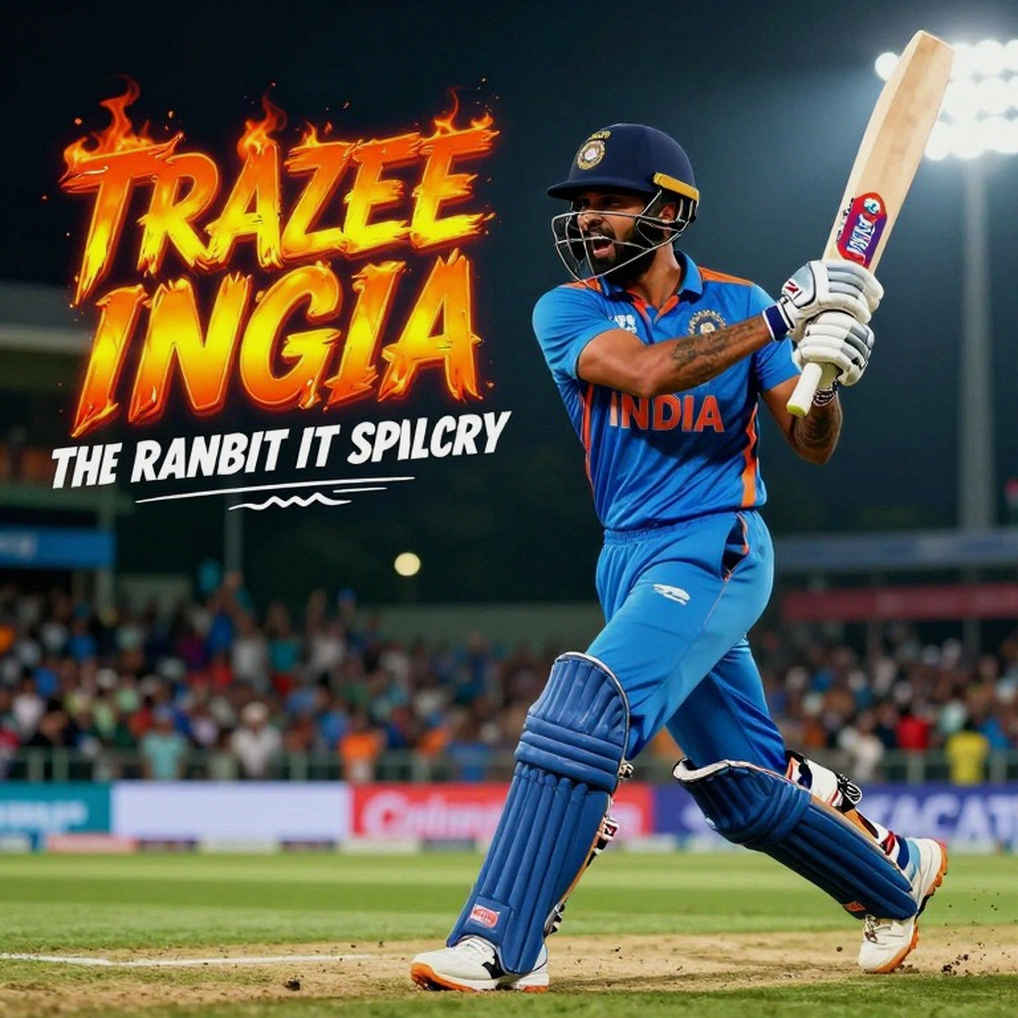
The IPL, PSL, BPL, LPL and ILT20 together have nearly filled the annual calendar. The benefits are real: a global stage for talent from small nations, financial self-sufficiency for boards, and year-round content for audiences. The risks are equally real: player workload and shortened careers, the weakening of bilateral and Test cricket, and a concentration of money in a few countries that leaves the rest of the region competing for the same talent pool without the same resources.
Pitches, weather and culture
Subcontinental pitches are dry, slow and spin-friendly, rewarding patience and variation over raw pace. Gulf conditions bring heat, humidity and dew, which inflate the importance of the toss and change the spinner's role entirely. And beneath all of it sits a very wide cultural base: street cricket, school cricket, an unbroken supply of talent. The challenge in Asia is never producing talent — it is identifying and developing it in time.
Women's cricket: slow but irreversible
Mithali Raj and Jhulan Goswami built careers when women's matches were not even televised. Harmanpreet Kaur and Smriti Mandhana took the team to global finals. Nida Dar and Chamari Athapaththu show the issue is continental, not Indian. Everywhere the same cycle operates: no broadcast means no sponsors, no sponsors means no money, no money means no administrative priority. The WPL was an attempt to break that cycle by force.
The future
Cricket at the 2028 Los Angeles Olympics opens a new chapter, bringing the sport to new markets and unlocking government funding — which matters more in Asia, where an Olympic medal carries political weight. Cricket's return to the Asian Games has already given smaller nations a practical pathway. Three questions remain unanswered: will ICC revenue distribution become more balanced; will a global window be agreed for franchise leagues before the international calendar shrinks further; and will the India-Pakistan impasse ever break? The last is not in the hands of any cricket board, and it is the single largest uncertainty in the entire picture.
Conclusion
Asian cricket is one story in three chapters. The institutional chapter — the ACC, the Asia Cup, Sharjah — gave the continent a shared stage. The economic chapter — 2026, 2026, the IPL, the broadcast boom — redistributed power. The competitive chapter, now unfolding through Afghanistan, Nepal and Oman, is proving that the sport's future does not belong to three or four nations alone. The real test is whether these three can be joined: if financial power serves only a few boards, talent will never reach its full reach; and if political deadlock keeps limiting opportunity, the largest market will remain cut off from its most valuable asset. What Asian cricket has built in four decades is remarkable. Its hardest examination is still ahead — whether it can create equal opportunity across the continent, or remain the sport of a few centres. That answer will be written not on the field but in boardrooms.