Kabaddi's Second Decade: League Glamour, Iran's Challenge and the Ground Reality
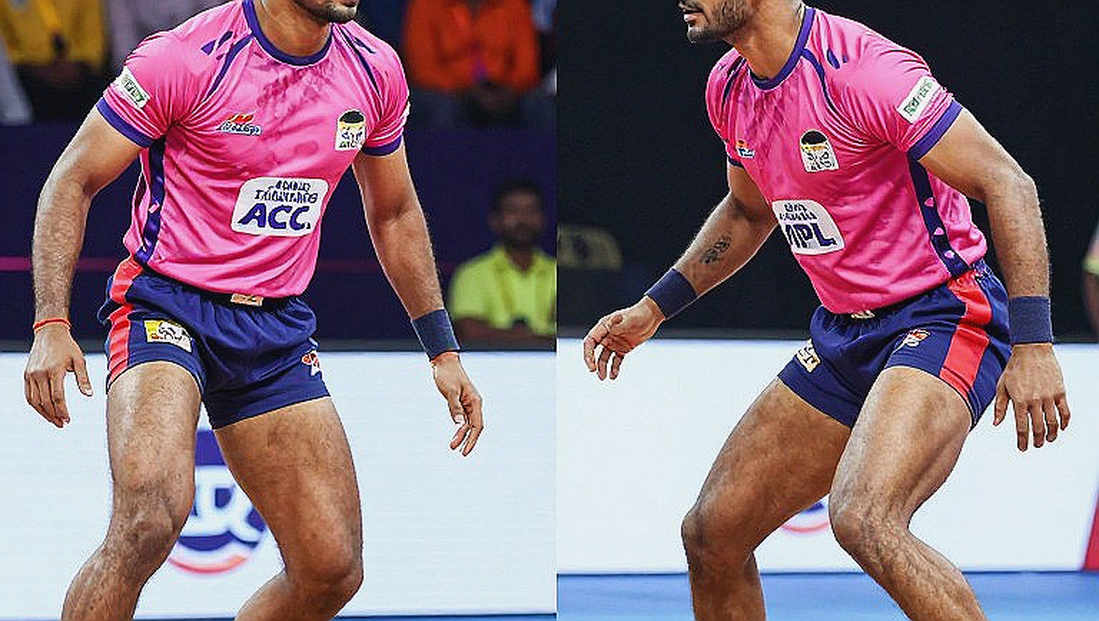
कबड्डी भारत का पारंपरिक संपर्क खेल है जो 2014 में प्रो कबड्डी लीग (PKL) की शुरुआत के बाद पेशेवर खेल-अर्थव्यवस्था में बदल गया। लीग की शुरुआत आठ टीमों से हुई और 2017 में इसे बारह टीमों तक बढ़ाया गया; पटना पाइरेट्स ने लगातार तीन सीज़न जीते, जबकि जयपुर पिंक पैंथर्स, यू मुंबा, बेंगलुरु बुल्स, बंगाल वारियर्स, दबंग दिल्ली और पुनेरी पाल्टन ने भी ख़िताब जीते। खेल का नियम-ढाँचा सरल है: सात खिलाड़ी, तीस सेकंड की रेड, बीस मिनट का हाफ़, टच और बोनस पर एक-एक अंक, ऑल-आउट पर दो अंक, तथा डू-ऑर-डाई रेड का टेलीविज़न-अनुकूल नियम। अंतरराष्ट्रीय स्तर पर कबड्डी 1990 बीजिंग से एशियाई खेलों का पदक खेल है; 2018 जकार्ता में ईरान ने पुरुष फ़ाइनल में भारत को हराकर पहली बार स्वर्ण जीता, और 2023 हांगझोउ में भारत पुरुष व महिला दोनों वर्गों में स्वर्ण पर लौटा। ईरान के फ़ाज़ेल अत्राचली और मोहम्मदरेज़ा शादलू चियानेह जैसे खिलाड़ी भारतीय फ़्रैंचाइज़ियों में खेले हैं। लीग की मुख्य चुनौतियाँ हैं: प्रसारण अधिकारों पर राजस्व की निर्भरता, महिला लीग का अभाव, दूसरी श्रेणी की घरेलू प्रतियोगिता का ख़ालीपन, खिलाड़ी चोट-बीमा और अनुबंध पारदर्शिता की कमी, तथा अनियमित अंतरराष्ट्रीय कैलेंडर।
A sport that rewrote its own image
For decades kabaddi was dismissed as a 'street game'. Confined to school sports periods, village akhadas and a handful of railway and bank teams, it became, after 2026, one of the most interesting experiments in Indian sports economics. The Pro Kabaddi League (PKL) did not merely change how the sport looks on television; it built an entire professional ecosystem — player auctions, franchise valuations, data-driven coaching and rules rewritten for broadcast.
But after more than a decade, any honest audit produces a split picture. On top is a glossy league whose graphics, slow-motion replays and drumming stadiums look no different from any premium sporting property. Below is the ground from which players emerge, where much of the preparation is still informal. And in between sits a third layer — the international mat, where India's dominance is no longer uncontested.
This report is not the story of one match, one auction or one decision. It is an assessment of where the sport stands as it tries to build India's largest audience, while its international credibility faces a serious challenge from Iran. It should also be stated plainly: what follows is an analysis based on publicly available information and the structural facts of the sport, not an interpretation of any single news article.
The rules are the product
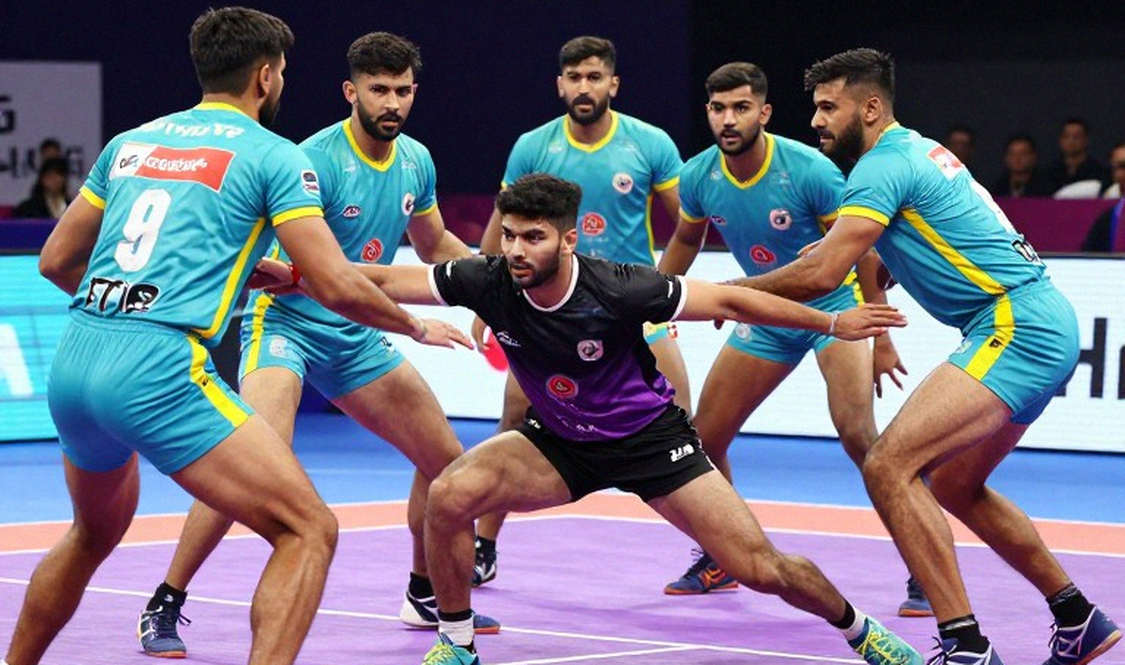
Kabaddi's greatest strength is simplicity. Seven players a side, thirty seconds for the raider to act, twenty-minute halves, and continuous scoring. One point for a touch, one for returning across the bonus line, two when the entire opposing side is out — the framework is transparent enough that a first-time viewer understands the sport within ten minutes.
Where traditional sports can turn defensive play into a bore, defence is the drama in kabaddi. The do-or-die raid rule — a fourth consecutive raid must produce a point — is the cheapest and most effective way to manufacture tension in the closing minutes. That rule was not part of the original game; the league adopted it for television. This is precisely where sport and broadcast product merge.
In women's matches the mat is smaller, which raises the speed of raids and tackles. That small technical difference shows that the sport's governing structure shapes rules not only by tradition but by viewer experience. And it raises an obvious question: has that same willingness to change reached the parts of the sport that need it most — player safety and compensation?
2026 to 2026: building a league
The PKL began in 2026 with eight teams. At the time, no Indian league outside cricket had achieved long-term success; the Hockey India League and other attempts had failed commercially. Kabaddi had one strong argument in its favour — its audience existed in parts of northern India where cricket's reach was limited to television, but the sport itself was understood on the ground.
In 2026 the league expanded to twelve teams, bringing new cities and sponsors. The season calendar gradually stabilised, and the league acquired an identity: a compressed two-to-three-month tournament with matches every day, in which every team meets the others several times. The format was inspired by the IPL but is far harsher given kabaddi's physical demands — every raid involves bodily contact.
The franchise owners included well-known entertainment and media figures, among them Abhishek Bachchan with Jaipur Pink Panthers and Ronnie Screwvala with U Mumba. In the early years these names gave the sport the credibility a traditional game needs to sell itself in a modern market.
Success on the mat was equally clear. Patna Pirates won three consecutive seasons, demonstrating that team-building strategy mattered more than geography. Jaipur, U Mumba, Bengaluru Bulls, Bengal Warriors, Dabang Delhi and Puneri Paltan have all won titles, which has prevented a single-team monopoly — good news for the sport.
The auction: where sport becomes a market
Kabaddi's most distinctive structure is its player auction. Cricket made the model famous, but in kabaddi its impact is deeper, because the baseline income of players was so low. A player holding a railway or bank job suddenly becomes the subject of crores in bidding — a change that is social as much as economic.
The other side of the auction is that it turns a player into a product early. Teams choose on performance within three or four-year contracts, and one poor season can cause a steep fall in value. With injury, the risk compounds. The role of a players' association or a permanent social security mechanism has remained limited — the model's biggest ethical weakness.
Still, comparatively, the league achieved what state associations could not for decades: players gained economic recognition before reaching the national stage. Talent identification once depended on government jobs and state selection; now league scouting and trials are a parallel route. That shift matters in itself.
Iran: the team that broke India's monopoly
The biggest development in international kabaddi over the past decade has been the rise of Iran. At the 2026 Jakarta Asian Games, Iran beat India in the men's final to win gold for the first time — the moment the Indian kabaddi establishment realised the sport's global centre could be more than one.
Iran's strength did not appear overnight. It has a tradition of tall, physically strong athletes, an understanding of contact sport drawn from wrestling, and discipline in tackling. The league gave that talent a stage: players such as Fazel Atrachali and Mohammadreza Shadloui Chiyaneh became among the most trusted names in Indian franchises. The irony is that India's own domestic league gave Iranian players the experience and confidence with which they beat India on the international mat.
This pattern echoes other sports, where franchise leagues globalised a game and ended the host nation's monopoly. In kabaddi the process has been faster and more visible, because the number of competitive international teams is small and one strong rival changes the entire balance.
Korea, Japan, Kenya, Poland, Britain and the United States have all attempted to organise kabaddi. Some have appeared at the Asian Games and World Cup. But the depth of these efforts is limited — in many countries the national team is a mix of the Indian diaspora and local enthusiasts. This is a thin layer of globalisation, not a grassroots structure.
The Asian Games: where history and the present collide
Kabaddi has been an official medal sport since the 2026 Beijing Asian Games. In the decades that followed, the Indian men's team's dominance was near-total. That dominance rested on an assumption that kabaddi was 'India's game' and no one else could compete. The 2026 Jakarta final broke that assumption.
At the 2026 Hangzhou Asian Games, India returned to the top, winning gold in both the men's and women's categories. That comeback was necessary for the sport, but it raised a difficult question: is India's edge coming from systems or merely from depth of talent? When Iran can reach the top within a single generation, India has no visible institutional plan to preserve its advantage.
The World Cup record reflects the same dilemma. India has had consistent success in international tournaments, but the calendar of those events has been irregular. The absence of a regular, prestigious international calendar is kabaddi's biggest structural weakness — the league happens every year, but matches between nations do not. Until that calendar exists, the sport's global identity will depend on the league.
The ground: where players come from
Beneath the league's gloss, an old structure is still at work — village akhadas, school and college tournaments, and government service teams. Indian Railways, banks, police and armed forces sides have given kabaddi players jobs and stability for decades. Many league players came through exactly that route — a job first, a league contract later.
The problem is that this system was never designed for professional sport. Its purpose was a livelihood, not world-class performance. That is why, in the league's early years, fitness, nutrition and injury management were uneven. Some franchises brought in foreign physios and sports science staff; the investment varied from team to team.
Kabaddi's presence at school and college level is widespread, but quality is highly unequal. States such as Haryana, Uttar Pradesh, Maharashtra and Tamil Nadu have strong traditions; many others lack trained coaches. A uniform national curriculum, coach certification and player-tracking system has been a persistent gap.
Women's kabaddi: equal on the mat, not in the market
Women's international achievements have been no smaller than the men's. Indian women's teams have won Asian Games gold, and their rivalry with Iran is genuine. But that success has not translated into the domestic market. The PKL is a men's competition; there is no league of comparable scale for women.
The effect is direct. A woman who wins an international medal still depends on a government job for financial security, while for a male player a league contract is a real career option. The gap is not only one of fairness but of market: women's kabaddi has not yet been built as a broadcast product.
Some states have launched women's leagues and sponsored tournaments, but these are typically one or two-week events, not regular seasons. Until a permanent women's league exists, half the sport's population will remain in uncertainty.
Governance: the weak link
Kabaddi is organised at three levels — international federation, national association and state associations. In India the national body has historically been central, but its elections, recognition and functioning have repeatedly been questioned. Administrative disputes over recognition have affected player selection and competitions.
The power balance between league and federation is a permanent tension. The league has money, broadcast and players; the federation has recognition and international representation. Without a clear division of labour, the player is caught between two authorities. The league's crowded calendar and national camp dates, for example, regularly clash, and every resolution is temporary.
Transparency is another weakness. Public information on contract terms, injury compensation and franchise-level disciplinary processes is scarce. This is not only an ethical issue — it also harms the sport's market, because investors and sponsors want stable, predictable rules.
Broadcast and economics: a future resting on one contract
Kabaddi's most valuable domestic legacy is proof that a league can be profitable in India without cricket. The league's broadcast partner has been a major sports network from the start, and it gave the sport a visual language it never had: camera angles, overhead raider views, slow-motion replays and constant statistics.
But that success left a central dependence — media rights. The league's revenue model rests mainly on television and digital rights, not tickets or merchandise. Stadium attendance in Indian kabaddi is encouraging but a small share of revenue. This means the league's economic direction is reset with every rights cycle. If the next contract is weaker than the last, both team spending and player salaries will come under pressure.
The second challenge is season length. A concentrated two-to-three-month tournament places a heavy load on the body. Several matches a season, constant travel and contact in every raid raise injury rates. A short season limits revenue; a long one increases physical strain. No permanent solution has been found.
Data and technology: a new language
In recent years the use of data in kabaddi has grown quickly. Teams now track an opposing raider's preferred direction, tackle timing, use of the bonus line and fatigue patterns. This is changing the language of coaching — video analysis now sits alongside experience and instinct.
But the benefit is not yet equal. Franchises with analysis teams are ahead of the rest. And at state level, where players come from, such facilities are almost absent. As a result, talent selection still relies largely on visual observation and recommendation. A national player database recording fitness, injury history and performance does not yet exist.
The biggest gap: the missing second tier
The depth of any sport is measured by its second tier. Cricket has domestic tournaments; football has lower divisions. In kabaddi there is a large void between the league and the national championship. A player not picked at auction has no regular platform to play on.
This gap causes three kinds of damage. First, careers end early. Second, teams lack a ready pool of replacements. Third, employment opportunities for coaches and support staff remain limited. A permanent national competition at league-adjacent level, scheduled in the months when the league is not running, would be the most direct solution.
Player welfare: the question still unanswered
Given kabaddi's physical nature, injury is an unavoidable risk, but its management is not yet institutional. For many players, the return from injury depends on personal resources. Contract length, pay during injury and rehabilitation costs are not governed by a uniform rule.
Retirement planning is similarly incomplete. The league has begun giving former players roles in coaching and administration, but this is not a structured career pathway. A sport that remembers its players only while they play, and forgets them afterwards, cannot attract talent in the long run.
The future: three clear priorities
If the next decade's direction is to be set, three things come first. One, a stable international calendar — a regular World Cup and regular bilateral series, so that rivalry with Iran becomes a continuing story rather than an occasional event. Two, a women's league and a domestic second tier, so that both income and career length stabilise. Three, a clear framework for player safety and contract transparency that survives changes of franchise.
The league will run without these. Television will not lack for the thrill of raids, tackles and do-or-die moments. But the difference between a sport and an industry is this: an industry can add a new audience every season, while a sport must repair the structure beneath it to stay alive. In its first decade kabaddi proved it can find viewers. The next decade is about what it gives back to the people standing on the mat.
Editorial note: This article is not an interpretation or summary of any single news report. It is an independent analysis based on publicly available facts about kabaddi — its rules, league structure, international competitions and governance. No fictional quotes, fictional scores or fictional player statements have been added. Where current figures may change, the trend has been described rather than a precise number.