
The Three-Point Revolution: Basketball's Shifting Strategy and the Challenge for a New Generation
आधुनिक बास्केटबॉल में तीन-सूत्री शॉट का बढ़ता इस्तेमाल एक सरल दक्षता गणना से आया है: 33% सटीकता पर तीन-सूत्री शॉट प्रति प्रयास लगभग एक अंक देता है, जो 45% सटीकता वाले दो-सूत्री शॉट से अधिक है। इसका असर तीन स्तरों पर दिखता है — मैदान पर खाली स्थान (स्पेसिंग) और पिक-एंड-रोल का महत्व बढ़ा, मिड-रेंज शॉट कम हुआ, और रक्षा में स्विचिंग अनिवार्य कौशल बन गई। क्लबों में डेटा विश्लेषण विभाग मानक हो गए हैं और चयन शॉट गुणवत्ता तथा रक्षात्मक रेंज के आधार पर होता है। जोखिम यह है कि युवा स्तर पर कम उम्र में ही विशेषज्ञता से बुनियादी तकनीक और चोट प्रबंधन कमज़ोर पड़ते हैं, तथा सभी टीमें एक ही सूत्र अपनाने से रणनीतिक विविधता घटती है। भारत जैसे बाज़ारों के लिए अवसर यह है कि आकार अब एकमात्र मापदंड नहीं रहा, बशर्ते घरेलू लीगों में प्रतिस्पर्धात्मक गहराई और युवा प्रशिक्षण ढाँचा साथ-साथ मज़बूत हो।
The biggest structural change in modern basketball is that a shot's value is now decided by distance, not position. Fifteen years ago, elite teams attempted fewer than twenty three-pointers per game on average; today that number hovers around forty. This is not fashion but simple arithmetic: a three-pointer made at 33 percent accuracy yields roughly one point per attempt, while a two-pointer made at 45 percent yields less. When the ratio is that clear, the entire coaching framework tilts in that direction.
The widening floor
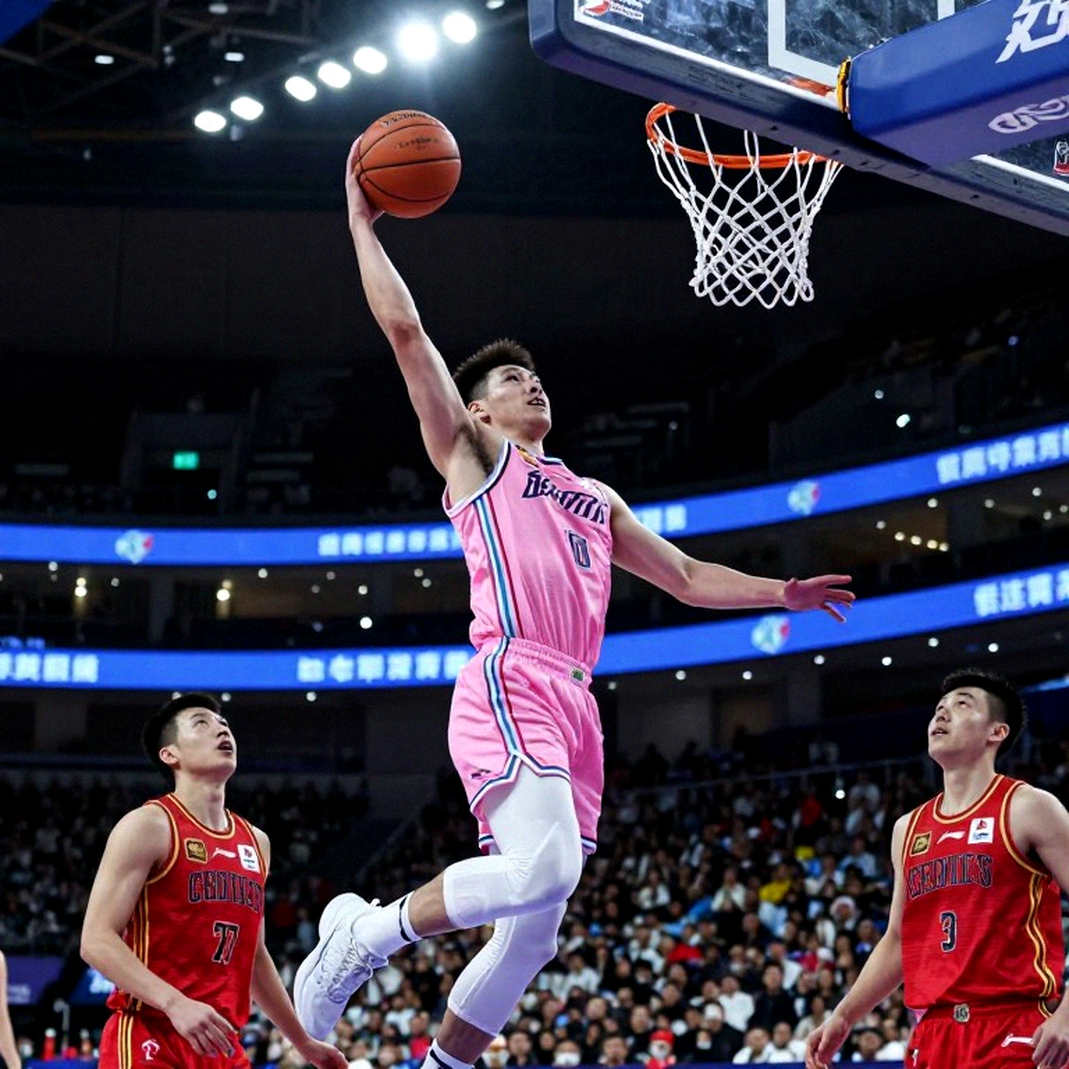
The immediate consequence of the three-point shot has been a rewiring of court usage. Once, the paint was crowded and perimeter players stood still; now players occupy both corners and both flanks so that driving lanes stay open and help defenders are forced into hesitation. Pick-and-roll has become far more lethal as a result — the defender must now handle two threats at once: the ball handler's penetration and the screener's pop.
The mid-range jumper, once the spine of the attack, is now counted among the least efficient options. Across elite leagues, the share of attempts taken from mid-range has steadily declined. Yet it would be wrong to declare mid-range dead. In the slower, more physical and heavily scripted basketball of the playoffs, when the perimeter is sealed off, that shot becomes a release valve. Data shows the way in the regular season, but in a seven-game series, adaptability decides.
The analytics department becomes mandatory
Over the past decade, a data analysis unit has become standard at every major club. Where assistants once charted shots by hand, camera-based tracking systems now log every player's speed, footwork and shot quality. Selection has been affected too — a player is no longer evaluated on points alone but on shot quality, defensive range and the space he creates.
The change has also redefined the big man's role. The traditional centre who operated only from the post is fading fast. The successful centre today is one who can shoot from outside, initiate offence with passing and hold up defensively against smaller players. Likewise, ball handling is no longer sufficient for guards — they must be a threat without the ball as well.
Rebuilding the defence
As much as offence changed, defence changed with it. Switching has become a basic skill, because leaving a shooter behind the arc is close to a self-declared defeat. This has directly affected foul management — defenders now prefer to maintain position rather than gamble on blocks. Rebounding strategy has shifted as well: long rebounds are now the launch point of a fast break, so teams plan the transition at the moment of the rebound itself.
The youth development problem
Worries are sharpest in academies and at junior level. When children are drilled to prioritise the three-pointer at an early age, two risks surface. First, fundamentals — dribbling, post footwork, handling under pressure — remain weak. Second, repeated shooting under an unbalanced load at a growing age raises injury risk. Many coaches now recommend late specialisation: broad skill first, specific role later.
Lessons for India and emerging markets
For markets like India, this shift is both an opening and a warning. The opening is that size is no longer the only entry point; a shorter, quick, accurate shooter with disciplined defence can still find a place at a high level. The warning is that imitating the three-point shot without basic physical preparation and competitive match practice proves hollow. Both the competitive depth in domestic leagues and the volume of the youth calendar remain uneven.
Beauty and its risk
With pace, space and passing, the game is more watchable than it has ever been. Sustained three-point barrages, quick transitions and lead changes in clutch moments hold viewers. But a risk is circling: strategic homogeneity. When every team follows the same formula, the difference narrows to skill and talent, and variety in contests diminishes. Some analysts believe that tweaks to defensive rules and changes that reward ways of scoring rather than a single shot could rebalance the trend.
The road ahead
Basketball's future lies at the meeting point of perimeter shooting and physical versatility. Teams that treat analytics as a decision tool rather than mere numbers, and invest alongside in fundamental technique, will stay ahead over the long run. The three-point line has redrawn the geography of the game; the question now is how quickly coaching, medical and youth development systems adapt to that redrawn geography.