
The New Architecture of Cricket: T20 Economy, Calendar Load and the Paradox of Global Expansion
क्रिकेट आज तीन समानांतर दबावों के बीच है: T20 लीगों का तेज़ वाणिज्यिक विस्तार, अंतरराष्ट्रीय कैलेंडर का बढ़ता घनत्व, और टेस्ट क्रिकेट की घटती आर्थिक व्यवहार्यता। 2007 के बाद से फ्रैंचाइज़ी क्रिकेट ने खेल के राजस्व का आधार बदल दिया, लेकिन सीमित खिलाड़ी-आपूर्ति के कारण हर नई लीग उसी समूह पर दावा करती है, जिससे खिलाड़ियों पर कार्यभार और चोट-जोखिम बढ़ता है। टेस्ट क्रिकेट दुनिया के केवल कुछ देशों में लागत वसूल कर पाता है, शेष में वह सीमित ओवरों के राजस्व से सब्सिडी पर निर्भर है। सबसे विश्वसनीय विकास क्षेत्र महिला क्रिकेट है, जहाँ बराबर मैच शुल्क और फ्रैंचाइज़ी लीगों ने वास्तविक बाज़ार बनाया। भविष्य के तीन निर्णायक मुद्दे हैं—खिलाड़ी-सुरक्षित कैलेंडर, राजस्व वितरण में वैश्विक संतुलन, और दर्शक के समय व धन का सम्मान।
Introduction: From Sport to Industry
Cricket today stands at the sharpest structural turning point in its organised history. When the first Test match was played in 1877, the game was essentially an insular, amateur, club-based activity. Through the twentieth century it became the competitive language of the Commonwealth, and in the first decade of the twenty-first century it turned into a global entertainment product financed by broadcast rights, franchise valuations, sponsorship and tourism.
Two events in 2026 changed the game's economics permanently: the first T20 World Cup and the announcement of the Indian Premier League. In the years that followed, the Big Bash League, Caribbean Premier League, Pakistan Super League, Bangladesh Premier League, Lanka Premier League, ILT20, SA20, Major League Cricket and the Women's Premier League emerged. Every new league advanced the same argument: more cricket, more audiences, more revenue. But that same argument produced a question that remains unanswered: is there a limit to this expansion, and who gets to set it?
This report is not about a single match, series or announcement. It is an analysis of the structural pressures that are now felt at every level of the game, from a player's body to a board's balance sheet.
The Proliferation of T20 Leagues
The core economic logic of franchise cricket is simple. Compared with bilateral series, a league format allows more matches in fewer days, in the same cities, using the same broadcast infrastructure. Production cost per match falls and broadcast value per match rises. That arithmetic attracted investors, and boards began converting their domestic competitions into franchise models.
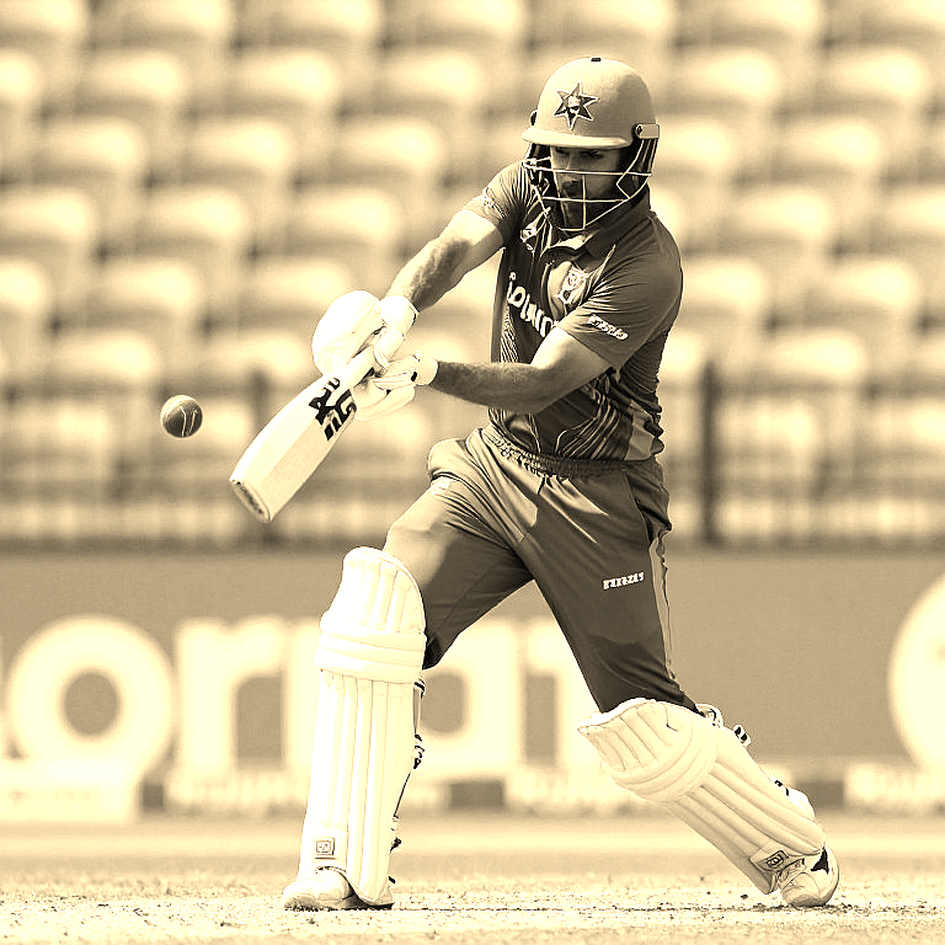
But as the number of leagues grew, an unexpected problem emerged: the supply of players is finite. The number of cricketers worldwide capable of influencing a high-level T20 match sits in the low hundreds. Every new league claims the same small pool, and the consequence is that the same player spends the year in different countries, in different coloured shirts, playing essentially the same cricket. Two things follow: a decline in the player's competitive intensity, and a blurring of the competition's distinctiveness in the viewer's mind.
A second dimension of league rivalry is the window. When a board reserves a fixed period for its domestic league, it is by definition cutting that period out of the international calendar. When several boards do this at once, the windows available for international series shrink. This is why bilateral series today are scheduled at irregular intervals, often without a coherent competitive rationale.
The Calendar: Limits of the Body, Limits of the Contract
The Future Tours Programme is more complex than the calendar of any other major team sport, because it must accommodate three formats simultaneously, plus the demands of domestic leagues. No other major team sport carries three parallel formats. That is cricket's unique distinction and also its most demanding administrative challenge.
Players' associations and current and former cricketers have long warned that calendar density is directly linked to injury risk. Fast bowlers carry the heaviest load: repeated bowling across tightly packed fixtures accumulates muscle fatigue, and accumulated fatigue produces small technical changes that lead to stress fractures and ligament injuries. This is not merely a medical issue but an economic one, because an injured star translates directly into ticket sales, broadcast value and sponsor commitments.
The clearest result of this pressure is already visible: several leading players have announced retirement from one or more formats, and others have taken breaks from international duty to prioritise availability. This is not a psychological reaction but a rational economic decision. When a franchise contract offers year-round security in limited-overs cricket while the international calendar imposes constant travel and shifting priorities, a player chooses to reduce career risk.
For boards this is a double bind. Central contracts generally allow players to appear in leagues, since it raises player income without a direct cost to the board; yet the same permission raises questions about national availability and performance. No board has resolved this contradiction consistently.
The Existential Question for Test Cricket
It is repeated in every discussion that Test cricket is the purest expression of the game. Within cricket that proposition is close to axiomatic. The problem is that the truth of the proposition and its financial viability are two separate questions. In only a handful of countries do Tests recover their costs. Elsewhere, Test matches are generally loss-making and are subsidised by revenue from limited-overs cricket.
When the subsidising source weakens, the question becomes how Tests survive. Attendance declines have been recorded in several places, particularly in series with limited competitive balance. One-sided Tests do not hold up as a product either; when the result becomes clear well inside five days, spectator interest breaks early.
Remedies are being considered and in part implemented: a dedicated championship structure that links every match to a points table, day-night Tests as a broadcast experiment, and local ticketing and family-experience packages. None of these addresses the underlying imbalance that gives only a few teams regular Test opportunities while leaving others waiting for years.
Revenue Distribution and Governance
Global cricket is governed in a setting of highly unequal revenue distribution. The largest markets receive the largest share, which is unsurprising in itself, because that is where the revenue originates. But when that distribution determines the resources available for the growth of the game, a circular problem emerges: a country without a market has no money for development; without development money, no market will form.
Efforts to break this cycle have been largely administrative: development programmes, coaching support and expanded fixtures with associate members. Their effectiveness has been limited because the structural incentives have not changed. No commercial board avoids scheduling its most attractive fixtures against teams that do not generate broadcast revenue. That commercial logic is understandable, but it degrades both the competitive quality and the long-term product value of the global game.
Women's Cricket: The Most Credible Growth Story
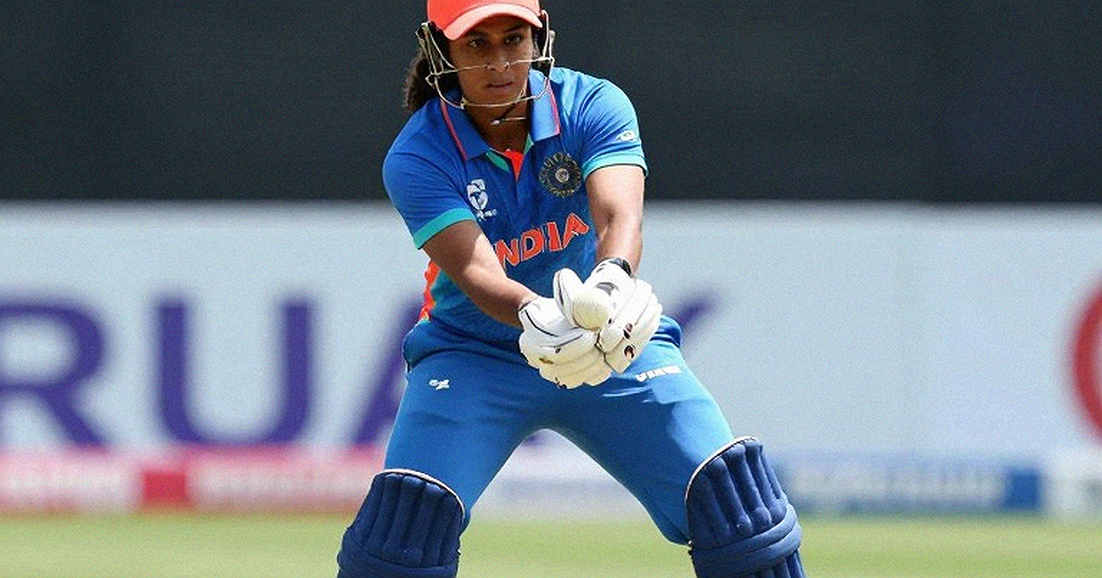
The most reliable growth story in cricket in recent years has not been in the men's game but in women's cricket. Equal match fees announced by several boards, the launch of women's franchise leagues, and an increase in women's Tests and ODIs have together created a genuine market after decades of neglect.
The expansion matters for another reason: it is taking place on the infrastructure that men's cricket built—stadiums, broadcast, training facilities. That means the cost of acquiring each new viewer is lower than in the men's game, which makes it a rare high-return investment. Boards have recognised this, and women's cricket is now an independent agenda item in sponsorship negotiations rather than a social programme attached to the men's game.
Challenges remain. In several countries the women's domestic structure still depends on a small pool of players, the number of matches is limited, and media coverage is uneven. The biggest risk is that women's leagues fall into the same over-expansion cycle that men's leagues have entered—increasing the number of tournaments despite a shortage of players.
New Markets and the Olympic Opportunity
The largest geographical opportunity is the United States, where a franchise structure has been built under Major League Cricket and where the demand of large diaspora communities is being organised. The importance of the American market lies in the fact that cricket there must establish itself as a new category rather than displacing a rival sport, which is far more difficult in cost terms.
Cricket's return to the Olympics is both a symbolic and a practical event. Symbolic, because it places the game inside government sports structures in countries where cricket had been an association-based activity; practical, because an Olympic cycle brings funding, facilities and athlete development programmes that would otherwise not exist. But the format will be T20, and that adds further pressure on cricket's three-format identity: if global visibility comes only through T20, the case for allocating resources to the longer formats weakens further.
In newer markets across Africa and Asia the picture is mixed. In some countries the game has grown quickly, but the binding constraint is infrastructure, not interest. Until training centres, grounds and a competitive domestic structure exist, talent cannot emerge; and until talent emerges, no market will form. This is the same cycle described earlier.
Technology and Data: Precision and Its Cost
The use of technology in cricket has moved well beyond decision correction. Ball tracking, biomechanical analysis, fatigue monitoring and real-time performance data are now part of the training process. Franchise scouting is largely data-driven, especially in identifying players who perform well in low-visibility domestic tournaments.
This technical maturity improves playing quality and injury management on one side, and creates a new inequality on the other. Boards with teams of data analysts and monitoring equipment can extract more from the same talent that other boards also have access to. The competitive gap widens, and it becomes harder for smaller cricket nations to remain at the top level.
Decision review systems and broadcast technology have transformed the viewer experience, but they carry a further consequence: the game is now fully measurable. Every innings, every over, every ball is evaluated. This shifts how players are judged—outcome carries more weight than process and style, which runs against the temperament of the longer formats, where patience and endurance have historically been valued.
Media Rights and the Shift to Streaming
Broadcast rights are cricket's largest single revenue source. Traditionally these rights went to television networks operating on advertising revenue. That is changing: streaming platforms are buying rights on a mixed model of direct subscription and advertising.
This shift means cricket's broadcast income may become less stable, not more. Television declines slowly; streaming subscription numbers can move quickly with market conditions and platform competition. This is especially risky for smaller boards, which have limited capacity to negotiate separate deals across separate markets and often depend on bundled inter-board packages.
Rising rights values across market segments also raise a question about what the viewer can bear. When a home series requires one subscription and a league requires another, the viewer's reach remains capped. In the long run this is a risk of revenue erosion rather than growth.
Integrity and Administration
As money in the game has grown, integrity risks have grown with it. Anti-corruption monitoring, betting contact and prohibited substance testing have received more attention from every board and from the international body. League expansion is a new challenge in this respect: when the game sits under many boards, many regulators and many operators across many countries, consistent oversight becomes difficult.
Player representation is another changing area. Players are no longer merely association members but independent commercial actors with advisers, lawyers and complex contractual webs. Boards are having to adapt central contracts to that reality. Many disputes have arisen precisely because contract language and player autonomy collide.
The Domestic Base
One dimension is routinely underestimated. Beneath the glare of international cricket, domestic first-class cricket has been weakening. In several countries domestic competitions draw no crowds, receive no broadcast, and players compete ultimately for a single goal: a franchise contract. The result is that the structure which develops the technique and patience required for the longer format is itself shrinking.
When domestic first-class cricket becomes a formality rather than a genuine competition, the quality of Test cricket suffers. This is a slow but permanent effect, and the solution does not come from a single match or rule but from investment in the domestic structure.
Conclusion: Three Priorities
Cricket's problem is not a shortage of expansion—expansion has never been greater. The problem is the balance of expansion. Three priorities stand out.
First, a calendar format that protects both player welfare and the relevance of the longer formats. This is a collective-interest question and cannot be settled by individual board revenue alone.
Second, a revenue distribution balance that makes global growth a measurable target rather than a slogan. The only credible indicator will be how many countries have a financially self-sustaining domestic first-class structure.
Third, respect for the viewer's time and money. When a viewer must follow one sport in five forms, across five subscriptions, in five countries, the game's value shifts from entertainment to obligation.
Cricket's history shows the game adapts: it has travelled from amateur to professional, from insular to global, from five days to twenty overs. The question is not whether it will change, but in whose interest the direction of change will be decided.