
World CricketFakhar Zaman's 127 and Saad Baig's Maiden Fifty Help Pakistan Clinch Tri-Series in Lahore
Fakhar Zaman's 127 and Saad Baig's Maiden Fifty Help Pakistan Clinch Tri-Series in Lahore
मुख्य तथ्य: पाकिस्तान ने लाहौर में श्रीलंका के खिलाफ ट्राई-सीरीज का खिताब जीता। फखर जमान ने 99 गेंदों पर 127 रन बनाए (स्ट्राइक रेट 128.3), जो उनका 12वां वनडे शतक है; इसमें 11 चौके और 6 छक्के शामिल रहे, यानी 63 प्रतिशत रन सीमा से। साद बैग ने 75 गेंदों पर 74 रन बनाकर वनडे में अपना पहला अर्धशतक जड़ा (स्ट्राइक रेट 98.7)। पाकिस्तान का स्कोर 36.5 ओवर पर 230/5 था, जब दोनों सेट बल्लेबाज़ आउट हो चुके थे। टॉप ऑर्डर लड़खड़ाया — माज़ सदाक़त 5 और बाबर आज़म 0 रन पर आउट। मैच लाहौर में घरेलू दर्शकों के सामने खेला गया, जिससे बल्लेबाज़ी के आंकड़ों में घरेलू परिस्थितियों का असर माना जाना चाहिए। लक्ष्य, जीत का अंतर, टॉस, मौसम और गेंदबाज़ी के आंकड़े उपलब्ध जानकारी में नहीं हैं और सत्यापन के अधीन हैं। निष्कर्ष: जीत दो व्यक्तिगत पारियों से बनी, संतुलित बल्लेबाज़ी क्रम का सबूत नहीं।
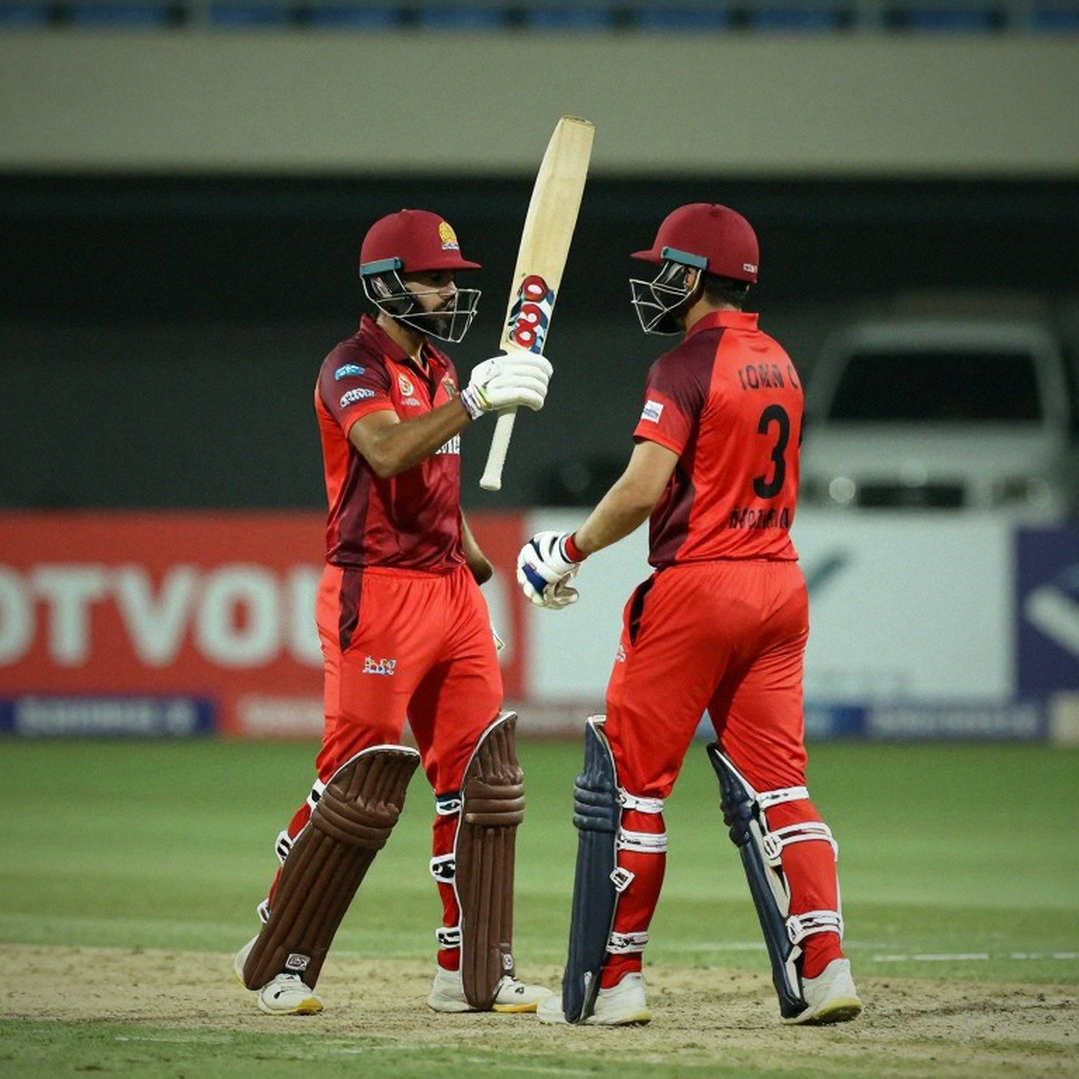
LAHORE: Pakistan have clinched the tri-series title on home soil, beating Sri Lanka in a chase built almost entirely on two innings. Fakhar Zaman struck 127 off 99 balls, his 12th ODI century, while young batter Saad Baig made 74 off 75 for his maiden half-century in the 50-over format. The two came together after Pakistan's top order had already wobbled early. The last scoreline recorded in the match report is 230/5 after 36.5 overs, at which point both set batters had been dismissed.
The shape of Fakhar's innings is clear: it was not an innings stitched together by rotation, but one built on boundary balls. A strike rate of 128.3 over 99 deliveries is unusually quick for a rebuilding phase in ODI cricket, where a top-order par is generally taken to sit between 90 and 100. Anything above 120 falls into the elite-aggressive bracket. He hit 11 fours and six sixes, meaning 80 of his runs came in boundaries alone — approximately 63 per cent of his total, against a top-order norm of roughly 50 to 60 per cent.
One more figure explains the nature of the innings. Seventeen of his 99 balls were hit for four or six, about 17.2 per cent. That means the aggressive intent was present from the start rather than deferred to a late surge. The style carries a cost, though. With 80 of his 127 coming in boundaries, he scored only 47 off the remaining 82 balls, roughly 0.57 runs per ball on non-boundary deliveries. That profile is highly valuable when chasing a steep required rate, but it is surface- and attack-dependent. On a slower pitch, or against bowlers taking pace off, the floor of that same approach drops.
Saad Baig's innings is structurally the more informative one. Seventy-four off 75 works out to a strike rate of about 98.7, comfortably at par for a support innings under early-wicket pressure. A maiden ODI fifty is in itself a signal of temperament and format-appropriate tempo, the classic second-fiddle template that does not waste deliveries. But one innings establishes nothing about his ceiling against quality spin or away from home. A multi-innings, multi-condition sample is needed before any promotion narrative is accepted.
The real concern lies at the top. Maaz Sadaqat could make only 5 and Babar Azam was dismissed for 0, leaving two of the top three with a combined contribution of five runs. A single duck cannot be treated as a verdict on form — that is the textbook small-sample trap and should be flagged rather than concluded — but the fact that the innings had to be carried by one senior batter and one newcomer indicates a side in rescue mode rather than a balanced batting unit.
That is why the framing that Pakistan's batting delivered on all fronts should be read with caution. The same match's numbers contradict it. Reaching 230/5 after wickets at 5 and 0 is a story of recovery from crisis, not a story of fluency from top to bottom. The result is a win; the process is a struggle, and a reader relying only on the headline cannot reconstruct that process.
Lahore's conditions are part of the equation too. Home ground, home crowd and a familiar surface together lift batting numbers. Lahore pitches have historically been regarded as batting-friendly, though nothing in the available report describes the nature of this particular surface. That is an inference, not an established fact, and should not be presented as one.
The gaps in the information matter just as much. There is no mention of Sri Lanka's bowling, Pakistan's bowling, the toss, the weather or dew. The target, the margin of victory, the balls remaining, and whether this was the final or a table-deciding league fixture are all absent. Calling the chase dominant or tight would therefore be equally unsupported. Without the scorecard, the difficulty of the pursuit cannot be assessed.
Despite these limits, some conclusions hold. First, Fakhar Zaman remains a genuinely high-impact ODI batter; a 12th hundred at a strike rate above 128 is not a fluke signature but evidence of sustained multi-year output. Second, Pakistan's middle order showed resilience under pressure, but that resilience rested on one individual innings rather than a collective plan. Third, top-order fragility is the most decision-relevant finding here, more so than the trophy.
Fourth, the team is in transition. A senior campaigner's century alongside a newcomer's maiden fifty is a healthy handover pattern only if the younger players are being given a defined role rather than used as injury cover. The available report does not clarify whether these players are being invested in or merely plugged in, and treating both as permanent future options without that distinction would be premature.
Fifth, the significance of hosting extends beyond the result. Staging and winning a multi-nation ODI series on Pakistani soil is the asset that unlocks broadcast inventory, ticketing and sponsorship for the board. In the context of international cricket's slow restoration in Pakistan after 2026, this is an administrative achievement as much as a sporting one, and should be viewed through that lens.
The real test lies ahead. Pakistan's top-three aggregate across the next five ODIs is the number to watch; if it falls below roughly 60 per cent of the team's runs, it will confirm that the Lahore win papered over a structural weakness. The same rule applies to Saad Baig — his strike rate away from home and against quality spin will be the true measure, not a single home innings.
One further point applies to Fakhar. His scoring is boundary-concentrated, which means variance will be higher when conditions and attacks are less friendly. Given age-curve dynamics, it is also plausible that his value becomes increasingly format-specific, concentrated in powerplay and middle-overs aggression rather than long-format anchoring. That is an inference, not a verified fact, since birth-date and fitness data are not part of the available report.
The conclusion is straightforward: the trophy is real and Fakhar's innings is its foundation. But the win was built on two individual performances rather than a collective batting display. Treating it as proof of a settled batting order would be a mistake. Read the scoreline, not the adjectives.
Disclaimer: This report is based on available public information and is intended for sports-information purposes only. It does not constitute betting advice or prediction. The target, margin of victory, toss result and bowling figures are not present in the available information and remain pending independent verification.
संबंधित खिलाड़ी
अनुशंसित
Empty Field, Full Confidence: Why 'N/A' Is Cricket Analytics' Most Expensive Lie2026-10-30
The Scorecard That Says N/A: The Questions Cricket's Data System Never Bothered to Ask2026-10-23
Inglis's Century Is a Bench Win, Not Control of the Match2026-10-31
The Scorecard of Zero: When the Record Came Back Empty and the Ground Stayed Quiet2026-10-30
Deepti Sharma's century ends a 3,450-day drought, not the batting question2026-10-26
अनुशंसित
The Empty Ledger: A Cricket Data Report With Zero Information Points2026-10-23
87 Runs at Eden Park: The Ground Was Legal. India's Powerplay Plan Was Not2026-10-31
The Scorecard of Zero: When the Record Came Back Empty and the Ground Stayed Quiet2026-10-30
Cape Town 140/0: Australia's toss wasn't the problem — its missing Plan B was2026-10-28
Three Names Cut, One Department Erased: New Zealand's Rebuilt Attack and the Price Nobody Has Priced Yet2026-10-28
अनुशंसित
The Empty Scorecard and the Full Room: In Cricket Analysis, the Biggest Lie Is the One That Looks Complete2026-10-23
The Story That Was Never Filed2026-11-01
Cricket on the Pitch of Measurement: When Numbers Speak and When They Fall Silent2026-10-31
The Scorecard That Says N/A: The Questions Cricket's Data System Never Bothered to Ask2026-10-23