Gambhir’s Selection Doctrine: The Defence Is Complete, the Question Is Missing
**मुख्य उत्तर:** गौतम गंभीर ने कहा कि उनका काम “सही फैसले, लोकप्रिय फैसले नहीं” लेना है और लंबे समय तक प्रदर्शन करने वाले खिलाड़ियों को लंबी रस्सी मिलनी चाहिए। उन्होंने वैभव सूर्यवंशी का नाम नहीं लिया। न्यूज़ीलैंड में सीरीज़ 3-0 से जीतने के बाद चौथे और पांचवें T20I में सूर्यवंशी को बाहर रखा गया था। **मुख्य तथ्य:** - सूर्यवंशी ने 199 के लक्ष्य का पीछा करते हुए सलामी बल्लेबाज़ के तौर पर 19 गेंदों पर 45 रन बनाए थे। - भारत ने पहले तीन T20I जीतकर सीरीज़ 3-0 से अपने नाम की; चौथा और पांचवां मैच डेड रबर थे। - टीम ने 17 तारीख़ को खेल खत्म किया और 18 तारीख़ को उड़ान भरी; हाथ में एक अभ्यास सत्र था। - गंभीर के आठ शब्दशः कोट एक ही ब्रॉडकास्ट इंटरव्यू से आए; साक्षात्कारकर्ता और प्रसारण तिथि दर्ज नहीं। - “व्यापक आलोचना” का दावा बिना किसी नामित आलोचक, उद्धरण या हवाले के दर्ज है। **स्रोत:** ब्रॉडकास्ट इंटरव्यू पर आधारित रिपोर्ट-सारांश; प्रकाशन तिथि स्रोत सामग्री में दर्ज नहीं। सत्यापन लंबित — कप्तानी का दावा, नाम की वर्तनी और पाँच-मैच फिक्सचर की स्वतंत्र पुष्टि आवश्यक है। **संबंधित प्रश्न:** प्रश्न: क्या गंभीर ने सूर्यवंशी को बाहर रखने का बचाव किया? उत्तर: उन्होंने सूर्यवंशी का नाम कभी नहीं लिया, इसलिए यह कहना अधिक सटीक है कि उन्होंने चयन-दर्शन पर पूछे गए सवाल का जवाब दिया। प्रश्न: सूर्यवंशी को बाहर रखने के पीछे वर्कलोड कारण बताया गया? उत्तर: वर्कलोड का ज़िक्र टीम की स्थिति बताने के लिए हुआ, बाहर बैठाने के स्पष्ट कारण के तौर पर नहीं — दोनों को अलग नहीं किया गया। प्रश्न: इस चयन-नीति का कोई प्रकाशित मापदंड है? उत्तर: नहीं; न बोर्ड, न चयन समिति और न कोच ने कोई लिखित कसौटी सार्वजनिक की, जिससे फैसला बाहर से परखा जा सके।
For three years my laptop has held a folder called ‘charge sheets’ — the primary documents of cricket’s disputed decisions: match referee reports, disciplinary orders, the clauses of the code of conduct. Whenever a controversy surfaces, I open that folder first. The reason is straightforward: the board is not a public authority, the right-to-information route is closed, and so every leaked email, every AGM minute, every selection committee press note counts as a rare artefact. Where there is no document, the silence is evidence too.
The material that reached me last week contained eight direct quotes, the name of a fifteen-year-old, and a question that appeared nowhere.
Gautam Gambhir’s statement was this — “My job is to make the right decisions, not the popular decisions.” Alongside it: an abundance of talent is not by itself a reason to change the XI, and players who have performed over a long stretch deserve a longer rope. The headline read: amid questions over India’s selection policy, Gambhir insisted on dressing-room security.
I watched that clip forty-seven times. What the coach said was clear. What he did not say was clearer. Vaibhav Suryavanshi’s name was in the headline, in the first paragraph, in the list of questions — and in none of Gambhir’s verbatim quotes. The teenager whose career was being debated was not mentioned once by the coach, at least not in the portion that made print. The dossier had a page missing. That page was the story.
Context: what the document gives, and what it withholds
In the five-match T20I series in New Zealand, India had sealed the contest by winning the first three. The fourth and fifth matches were, by that measure, dead rubbers — the pressure of outcome removed, the room for experiment open. The team finished playing on the 17th and flew on the 18th, with a single practice session in hand, and in the coach’s words “a lot of boys are coming here for the first time,” while the hosts remained “dangerous” in their own conditions.
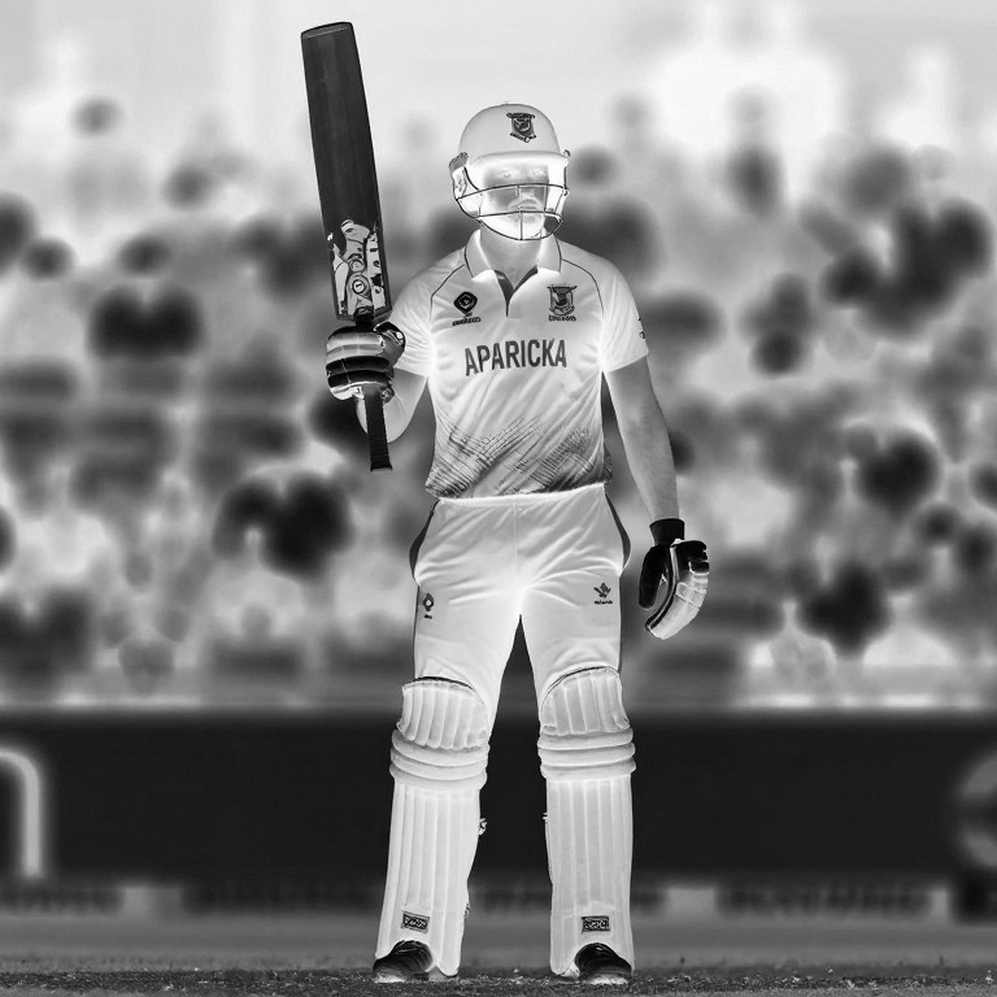
Suryavanshi’s series is recorded in this sequence: 4(8) at number three, then promotion to opener — a chase of 199, the most pressurised slot in the innings — and there, 45 off 19 balls. After that he was left out of the fourth and fifth matches.
This is where I miss my folder. No selection committee statement, no captain’s quote, not one line from a board spokesperson, and most importantly no words from Suryavanshi himself — nor any record that he was asked for comment and was unavailable. On the decision under dispute, not one of the two decision-makers is on the record.
Core: two syllogisms, and the empty space between them
Gambhir’s argument has a clean frame. Premise one: my job is the right decision, not the popular one. Premise two: an abundance of talent does not by itself justify changing the XI. Premise three: those with long-track records deserve a longer rope. Conclusion: the omissions were correct and consistent.
The report’s own syllogism, by contrast, is never written down — only implied. The public questioned Suryavanshi’s omission; Gambhir answered a question about talent and selection; Gambhir never named Suryavanshi; therefore Gambhir defended the Suryavanshi omission.
The third link carries the weight and it is not in the text. The connective tissue is the journalist’s question, which the report does not reproduce — only its residue survives, in a phrase like “as you just mentioned.” The entire story rests on a question we cannot see. That is not a flaw in the reporting so much as the boundary of it, and a boundary must be called a boundary, or it hardens into a conclusion.
The first premise cannot be falsified, because it was never defined
“The right decision” was asserted, not operationalised. No criterion was named — not team balance, not conditions, not match-up, not workload, not succession planning. Without criteria, any selection outcome can be retro-fitted into “the right decision.” And a defence that cannot be wrong is not a defence; it is a posture.
In February 2026, the third India-England Test at the Narendra Modi Stadium in Ahmedabad ended inside two days, seventeen wickets fell on day two, and match referee Javagal Srinath rated the pitch “average” — no demerit points, no published methodology, a word never tested on appeal. I wrote twelve hundred words on it, asking what “average” meant, who signed it off, and whether the system had ever been examined in a hearing. That word has returned in new clothes. “The right decision” is this sport’s “average” — a rating that certifies itself and never discloses its definition.
The second premise was applied asymmetrically
Read literally, “a longer rope for proven players” means Suryavanshi should never have debuted at all. He did. He played at number three — the least experienced player handed the most responsible slot, which is itself a statement that the selectors considered him ready. Then promotion to opener in a chase of 199, and 45 off 19: precisely the evidence that earns rope. That evidence earned no rope.
Here the principle’s true character shows. It shields incumbents from challenge but does not obligate reward for performance. A shield on one side, no duty on the other. When a rule is cited only in defence and never used as a standard, it stops being a rule and becomes an alibi.
Two defences that collide, and never do
“The right decision” is an outcome frame — about what was decided. “Players should feel secure” is a process frame — about how the decision felt. Neither was tested against the other; the report set them side by side as though they reinforced each other. An outcome-based argument guarantees nothing about process, and process comfort certifies nothing about outcome. Put in one sentence they sound balanced; logically they are two doors on one wall.
The workload premise cuts against its own conclusion
Play on the 17th, fly on the 18th, one practice session, players adapting to unfamiliar conditions, several young men on their first tour, and a series already won 3-0 — matches four and five carrying no consequence. That is the textbook combination of workload management, dead rubbers and first-time tourists, which is to say it argues for playing a fresh teenager. The report records both premises and never notices that they testify for the critics on the exact decision under dispute.
There is a finer point attached. Was workload offered as a reason or as praise for the squad? The report conflates the two — “the boys are tired” and “the boys are excellent” arrive in the same paragraph. When reason and commendation share a sentence, the reader is left with no way to tell whether the omission was punishment, strategy, or housekeeping.
The decisive question was never asked
“Why not Suryavanshi” is the wrong question. The right one is: what would he have had to do to keep his place? How many balls, in what situation, in what role, across how many matches? Until that answer exists, selection cannot be proved wrong from outside — and what can never be proved wrong should not be called a policy. What the headline called a selection policy is in fact a personal reasoning system with no published test.
Not one line arrived from the board on whether this is the coach’s philosophy or team policy. The selection committee issued no note. The old pattern holds: in the IPL, squad lists, trade windows and even broadcast contracts are densely documented; move down the pyramid — domestic cricket, selection reasoning, discipline — and the paper thins out. Selection reasoning is the most discussed and least documented process in Indian cricket.
Source audit: who spoke, who listened
The verbatim, attributed quotes come from a single origin — one broadcaster interview, with no named interviewer, no air date, no full transcript. Sub-quotes can be excerpted to fit the defence.
At the paraphrase level sits “dressing-room security,” and that is where the largest asymmetry lives. The headline’s language comes from a source that is not verbatim. The verbatim record is not as strong as the headline makes it.
The third tier is scoreboard-verifiable fact — except for one item: the claim of “considerable criticism” over selection. That claim is the reason the story exists, and it carries no name, no citation, no quote. Who are the critics? Did they write anywhere? Was their argument ever recorded? Not one sentence in the report states the critics’ actual case. The defence was answered by nobody, because the accuser was never called to the stand.
One factual inconsistency must be registered in this structure, and it is the asymmetry. The subject of the report is a fifteen-year-old whose career decision is being debated, and he is the only party in the piece with no words. I know that in the noise this gap is never audible. Not being audible does not make it disappear; it makes it persist.
Contrarian angle: outrage and unfalsifiability, the same disease
The easiest conclusion is that the coach was right or wrong. Both are incomplete. The real pattern is that both sides fought without a criterion. The coach said “the right decision” and supplied no test; the criticism supplied no name and published no criterion of its own. One side keeps producing a word that can never be wrong, the other an outrage that never defines itself. These are not two enemies but two symptoms of one ailment: the absence of a standard.
I watched the 45(19) clip several times too. A replay can show what happened; it cannot show what was said in the selection room afterwards, who said it, and who nodded in agreement. There is no camera in that room, and its absence is the tallest gap in this story.
The second angle is less comfortable. Playing a teenager in a dead rubber is not kindness; it is a transfer of risk — placing him where the blame for a defeat will land on him and where his career ledger will open with that defeat. But leaving him out is also a transfer of risk, because evidence like 45(19) goes stale without interpretation: “it was one innings by a kid, nothing more.” In both options the player carries the risk and the institution does not. That is the oldest weakness of Indian selection, and it is not a conspiracy; it is the direct result of incentives.
Limits of verification — what I cannot say
I will not cheat the reader by implying I hold the full record. Four items remain open and should be checked first. One, the source material names Shreyas Iyer as India’s T20I captain; to my knowledge that role sits with Suryakumar Yadav. If this is wrong, the entire news hook collapses. Two, the spelling of the name varies across reporting, and an age descriptor decays on its own with time. Three, India’s T20I series in New Zealand have typically been three matches; a five-match fixture list demands verification. Four, whether matches four and five were dead rubbers and whether that was put to Gambhir has no answer in the record.
I rank these gaps in three separate categories, because their weight differs: no record exists; a record exists and is withheld; a record exists and is boring. The third is the least exciting and therefore the most probable. Until evidence arrives, I take it as the default. In the noise, administrative mess and deliberate concealment look identical; without the document they cannot be separated, and calling them the same thing without separating them is dishonest.
Forward
The next time a fifteen-year-old is picked or left out, the question should not be “why” but “on what criterion.” The Indian selection committee should hold that answer in writing and publish it as a one-page note after the match: who was viewed in which role, on which measure, and who fell short of that measure. A separate workload and safeguarding protocol for teenage players should be published, because the career of a player under sixteen is not the subject of a coach’s confidence; it is the institution’s responsibility.
The rulebook does not decide what to ignore; it decides what to write down. The day selection reasoning is written down, sentences like “the right decision” will shrink on their own — and that will be their real examination.
— Root: Referee