
Kabaddi: From Mud Akharas to Mats and Markets, the Professional Journey of a Homegrown Sport
कबड्डी क्या है? कबड्डी सात-सात खिलाड़ियों की दो टीमों के बीच खेला जाने वाला संपर्क-आधारित टीम खेल है, जिसमें एक रेडर 30 सेकंड के भीतर विरोधी आधे हिस्से में जाकर डिफेंडरों को छूकर अंक लाता है और लगातार 'कबड्डी' कहता रहता है। मैट का आयाम पुरुष वर्ग में 13x10 मीटर और महिला वर्ग में 12x8 मीटर होता है। अंक कैसे बनते हैं? डिफेंडर को छूने पर 1 अंक, बॉक लाइन पार करने के बाद छूने पर बोनस अंक, टैकल पर डिफेंस को 1 अंक और विरोधी टीम के ऑल-आउट (लोना) पर 2 अतिरिक्त अंक मिलते हैं। डू-ऑर-डाई रेड क्या है? लगातार दो खाली रेड के बाद तीसरी रेड में अंक लाना अनिवार्य हो जाता है। प्रो कबड्डी लीग कब शुरू हुई? 2014 में आठ फ्रैंचाइज़ी टीमों के साथ, बाद में विस्तार करके बारह टीमों तक। कबड्डी कब अंतरराष्ट्रीय हुई? 1990 के बीजिंग एशियाई खेलों में इसे आधिकारिक दर्जा मिला; महिला वर्ग 2010 से एशियाई खेलों में शामिल है। क्या कबड्डी ओलंपिक खेल है? नहीं, कबड्डी अभी ओलंपिक कार्यक्रम का हिस्सा नहीं है। भारत का पुरुष वर्ग में दबदबा कब टूटा? 2018 के जकार्ता एशियाई खेलों के फाइनल में ईरान ने भारत को हराकर स्वर्ण जीता।
Thirty seconds, seven players and a single breath — kabaddi's entire force is contained in those three numbers. A raider crosses into the opponent's half alone, chanting kabaddi-kabaddi continuously, with speed, balance and judgement as his only defences. For decades this scene stayed confined to village akharas across the subcontinent. Over the past decade, however, the sport has moved from mud to mats, from mats to television screens, and from screens to analytics dashboards. Kabaddi is no longer seen merely as a traditional pastime but as an organised ecosystem with its own league, its own auction economy, its own scouting pipeline — and its own structural weaknesses. Understanding that shift requires looking at three levels separately: the arithmetic of the rules, the science of strategy and the logic of the market.
The arithmetic of the rules
Kabaddi is best understood as a game of point mathematics. The international mat for men's competition measures 13 by 10 metres, while the women's mat measures 12 by 8 metres. The baulk line, bonus line and lobby define when a raider may take risk and when he must retreat. Touching a defender in a raid earns one point; touching a defender after crossing the baulk line adds a bonus point; stopping the raider earns the defending team a tackle point; and reducing the opposition to an all-out gives two additional lona points.
The most interesting clause is the do-or-die raid. After two consecutive empty raids, the third raid must yield a point — the raider no longer has the option of avoiding risk. This rule turns a measured, calculated contest into a game of psychological pressure. Many matches are decided by which team keeps a cold head in a do-or-die situation and which side, carried away by emotion, commits to the wrong tackle. The restriction that a raider may not stay on the mat for more than three raids simultaneously tests both the raider's endurance and the coach's calculation.
Strategy: the era of data and defence
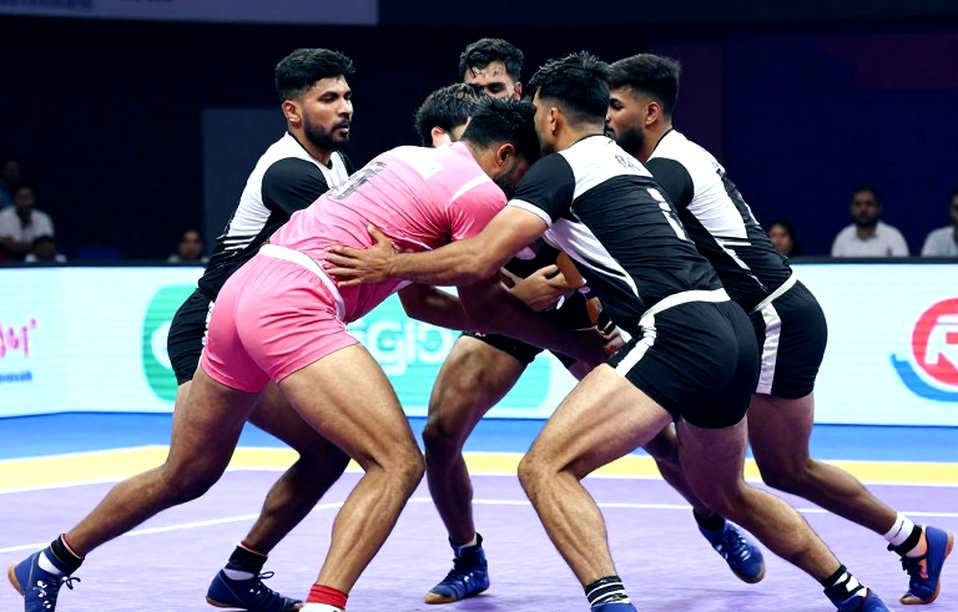
In traditional kabaddi, experience and instinct were the strategy. Modern kabaddi treats video analysis, opposition scouting and player-specific data as essentials on par with physical preparation. A contemporary raider has three broad options — hand touch, toe touch and the dubki, a ducking escape — but the choice depends on the shape of the opposing defence. Against a chain defence, where defenders interlock to cover one another, a direct tackle is hard to break and the raider must enter from an edge and draw the covering defender out. Against a scattered defence, a rapid entry and quick return is the most effective approach.
Defensive vocabulary has become professional too: ankle hold, thigh hold, block, dash and cover. The corner defender's job is not only to stop the raider but to steer him into a part of the mat from which escape is difficult. The cover defender determines how aggressive a team can be, because a strong cover allows corners to attack without fear. Teams now study a rival raider's raid maps across his last ten matches to decide which direction to force him into. Physiotherapy, sleep and nutrition monitoring, and the management of travel fatigue have all entered the coaching staff's remit.
The league ecosystem
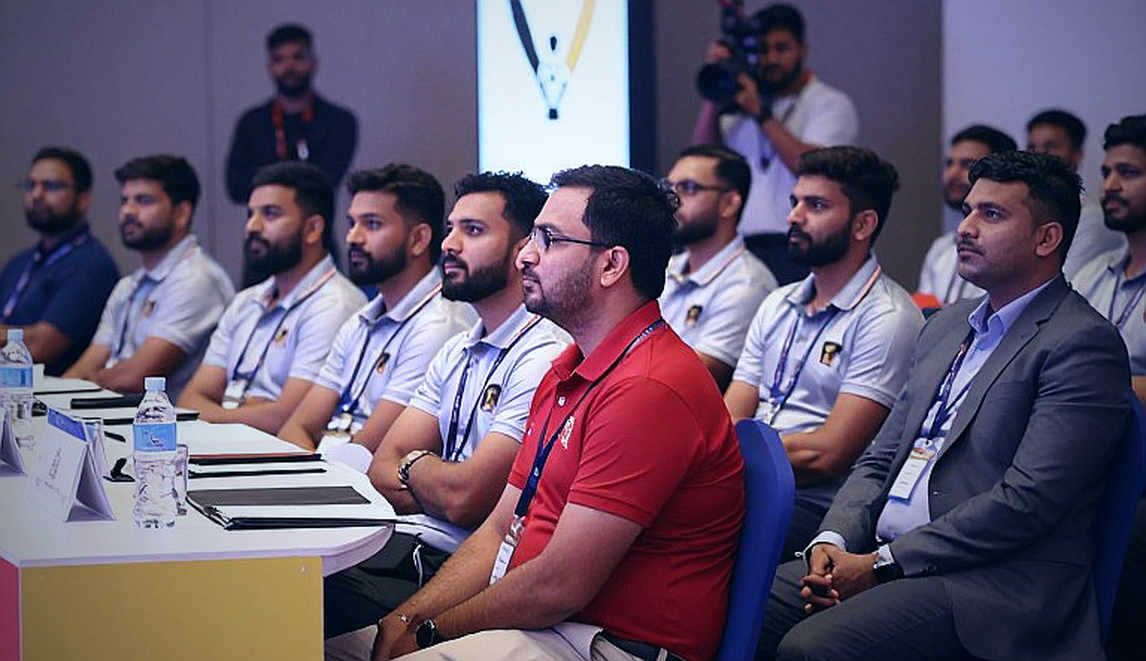
The professionalisation of kabaddi is tied primarily to the Pro Kabaddi League, which launched in 2026 with eight city-based franchises and was later expanded to twelve teams. The league drove three major changes. First, it gave players a platform on which both income and identity extended beyond the national circuit. Second, the auction system created a market in which performance acquired a direct economic value. Third, television broadcast carried the sport to audiences who could never have reached an akhara.
Part of the league's success lies in its television-friendly format — short matches, rapidly shifting scores and a clear dramatic arc in every raid. But that success has also created a centralised dependency. Much of Indian kabaddi rests on a single league's calendar and its broadcast revenue. If a season is postponed, players' incomes, franchise planning and audience habits are all disrupted together. A durable economic model requires strong ticketing, local sponsorship and a credible second tier, rather than reliance on a central broadcast contract alone.
Rural India and the credibility of scouting
Kabaddi's greatest strength is its popular base. Seasonal tournaments are still held in villages across Haryana, Uttar Pradesh, Maharashtra, Karnataka, Tamil Nadu, Kerala and Rajasthan, with prizes ranging from cash to farm equipment. Crucially, these tournaments form an informal scouting network: many professionals were first spotted at local competitions before reaching national camps.
Yet this base lacks institutional structure. Grassroots coaching quality is uneven, injury management for juniors is weak, and talent identification often depends on personal contacts. Sports quotas in government jobs and the role of public sports institutes have made kabaddi a livelihood option for many families, but that support is unevenly distributed. A national junior circuit in which every state's teams play each other regularly would move talent discovery out of a contact-based system.
Women's kabaddi: growing but underserved
Women's kabaddi has a competitive tradition no weaker than the men's — the women's event has been part of the Asian Games calendar since 2026 and the Indian women's team was long a dominant force. Several states have strong domestic traditions as well. The problem is not talent but structure. Compared with the men's professional league, women have not received equivalent broadcast exposure, prize money or calendar stability. The direct consequence is that even a successful woman player often depends on other sources for financial security.
The consequences go beyond money. Without broadcast there are no audiences; without audiences there are no sponsors; and without sponsors the case for a league weakens — a cycle the market alone cannot break. Many former players and coaches argue that a women's league must be treated as an investment in its early phase rather than as an immediate profit centre.
The international picture
Internationally, kabaddi's identity was built through the Asian Games, where it became an official sport at the 2026 Beijing edition. For a long period India dominated the men's event, but Iran challenged that monopoly with systematic preparation and a fitness-based style, and won gold at the 2026 Jakarta Asian Games by beating India in the final. That result signalled that kabaddi was no longer one country's sport. Bangladesh, South Korea, Japan, Kenya and several European teams also compete internationally. This geographic spread benefits the sport, but its biggest limitation remains that kabaddi is not part of the Olympic programme. For international federations, the challenge is to pursue expansion and standardisation of rules simultaneously.
Challenges: injury, calendar and trust
Kabaddi is physically demanding. Ankle and knee injuries are the most common, because a raider must duck, twist and escape between tackles at speed. Falls and collisions on the mat are frequent as well. Injury management, recovery windows and player welfare must therefore become part of the league calendar rather than a matter for medical reports alone.
The second challenge is financial sustainability. Franchises do not rest on the vast revenues available to cricket, so each team's business model depends on local sponsorship, ticketing and central league distributions. The third is governance — consistency in refereeing, clarity in player contracts, and vigilance against betting and corruption. In a sport where every point directly affects the result, a single disputed call can change the course of a match. Investment in review technology and referee training is therefore unavoidable.
The road ahead
Kabaddi possesses something rare: a genuine popular base in India and the popularity of a professional league at the same time. Three priorities stand out for the next phase. First, a structured second tier or national circuit, so that the hundreds of players outside the league have a route to competition and income. Second, an independent professional platform for women's kabaddi, because the current structure has talent but lacks visibility. Third, sustained investment in coach education and junior competition, so that the quality of the sport emerges from a system rather than from individual talent alone.
If all three materialise, kabaddi will not remain merely a popular league sport but will become one with genuine international competitive depth and a relatively durable economic foundation. A sport that can change its outcome in thirty seconds deserves no less.
संबंधित खिलाड़ी
अनुशंसित
Commonwealth Kabaddi Championship: The 62-Match Arithmetic Says the Women's Draw Is Three Nations Smaller2026-10-23
India's Opener in Ahmedabad: Against England, New Caps Matter More Than the Margin2026-10-24
Commonwealth Kabaddi Championship 2026: 13 Nations, Nine Days in Ahmedabad — and an Empty Broadcast Slot2026-10-30
The Bonus Line Is Now a Trap: How the Third Defender Runs PKL Season 12's Raiding Economy2026-10-31
अनुशंसित
Commonwealth Kabaddi Championship 2026: 13 Nations Land in Ahmedabad, and Still Nobody Has Named a Broadcaster2026-10-30
Source Unavailable: Kabaddi News Report Cannot Be Produced2026-11-01
Ahmedabad's Commonwealth Kabaddi Bet: 13 Teams, 9 Days, and an Announcement Still Half-Written2026-10-23
Kabaddi's Real Defence Is Data — And Nobody Holds It2026-10-31
Commonwealth Kabaddi Championship 2026: The Most Important Column in the Day-1 Table Is Empty2026-10-30
अनुशंसित
Commonwealth Kabaddi Championship 2026: 13 Nations, Nine Days in Ahmedabad — and an Empty Broadcast Slot2026-10-30
Kabaddi's Real Defence Is Data — And Nobody Holds It2026-10-31
Kabaddi's Second Decade: League Glamour, Iran's Challenge and the Ground Reality2026-11-01
India vs England, Match 4: Rotation, Naveen Kumar's vice-captaincy and a low-information victory at Commonwealth Kabaddi Championship 20262026-10-24
From 14 to 13: The Empty Line Where Pakistan Should Be on Ahmedabad's Entry List2026-10-23