
French Open 2026: 73 Minutes, Three Games and One Misleading Adjective — What Sindhu's Semi-Final Win Really Says Ahead of the Final Against An Se Young
**संक्षिप्त उत्तर कैप्सूल** फ्रेंच ओपन 2026 महिला एकल फाइनल में पीवी सिंधु (भारत) का सामना दुनिया की नंबर एक और मौजूदा विश्व चैंपियन अन से यंग (दक्षिण कोरिया) से होगा। सेमीफाइनल में सिंधु ने हीना अकेची (जापान) को 73 मिनट में 21-10, 20-22, 21-16 से हराया। सिंधु का अन से यंग के खिलाफ रिकॉर्ड 0-10 है और यह उनका 11वां मुकाबला होगा; 2026 में दोनों के बीच दो मुकाबले पहले ही हो चुके हैं। सिंधु के 2026 सीजन में दो सुपर 750 फाइनल हैं, जिनमें जापान ओपन का खिताब शामिल है, लेकिन कोई सुपर 1000 फाइनल नहीं। **मुख्य तथ्य:** - स्कोर: 21-10, 20-22, 21-16; अवधि 73 मिनट - सिंधु दूसरा गेम 17-16 से आगे थीं और 20-22 से हारीं - निर्णायक गेम में 15-16 से लगातार 6 अंक जीतकर मैच जीता - सेमीफाइनल जीत को 'एकतरफा दबदबा' नहीं कहा जा सकता; असली दबदबा केवल पहले गेम में था - सिंधु की उम्र 31 वर्ष; फाइनल से पहले लगभग 24 घंटे का अंतराल - स्मैश गति, औसत रैली लंबाई, अनफोर्स्ड एरर जैसे आंकड़े उपलब्ध नहीं - शैलीगत टकराव: सिंधु का पावर-अटैक बनाम अन से यंग का सर्वकोर्ट नियंत्रण और रिट्रीवल **संभावित नतीजा:** सिंधु का जीत का रास्ता संकरा है — रैली छोटी रखना, दो गेम में नतीजा तय करना और क्लोज़-आउट क्षमता दिखाना जरूरी है।
Lead
When PV Sindhu closed out Saturday night's semi-final in Paris by taking six straight points from 15-16 down in the decider, the excitement in the commentary box was justified. A 31-year-old whose brightest career phase came a decade ago was stringing together six consecutive points in the closing stretch of a 73-minute three-game battle — that is not a small thing. But calling this win an 'outclassing', that is, claiming Sindhu completely smothered Hina Akechi, does not survive contact with the scoreline. This report examines exactly that gap: what the word says, and what the numbers say.
In the French Open 2026 women's singles final, Sindhu will face world No. 1 An Se Young of South Korea — also the reigning world champion — against whom Sindhu's record stands at 0-10. This will be their 11th meeting. One win would end the longest headache of Sindhu's career, but before assessing that possibility it is necessary to understand what actually happened in the semi-final.
Game one: the only genuine dominance
21-10. This is the only segment where the word 'outclassing' is technically accurate. Sindhu's height and long levers worked to full effect here: a high smash contact point, short rallies, and no chance for Akechi to use her speed. Winning a game by eleven points is not just a win, it is proof of control. The problem is that badminton is a three-game sport, and this is where the picture begins to change.
Game two: 17-16 to 20-22 — a failure to close
Sindhu led 17-16 in the second game. Against an opponent she had just blown away 21-10, a 17-16 score is a warning in itself: the game had levelled out, control had slipped. And then came the costliest thing in the sport: Akechi took six of the last nine points and the game slipped away 22-20. Sindhu lost it 20-22. In technical terms this is a close-out failure — the ability to shut down a game you have already won. Against world-class opposition, that is the single most valuable skill, because top-four players do not offer such chances twice.
Game three: six points from 15-16 — evidence of pressure behaviour
The same pattern repeated in the decider: Sindhu was 15-16 down. That means control slipped twice inside 73 minutes. What followed — six consecutive points from 15-16 to 21-16 — is the most valuable technical signal of the whole match. Keeping shot selection stable under pressure, maintaining the between-points routine, and having the nerve to take risk rather than merely avoid error: all three showed up in that stretch. But honesty demands one caveat: that recovery came against an opponent who is not the world No. 1. Against An Se Young, 15-16 may never be reached; there, the same lull converts directly into a lost game.
The status of the adjectives
Sports journalism uses two kinds of adjectives: descriptions of what was seen, and descriptions of what was felt. Here, 'outclasses', 'error-free' and 'dominated most of the decider' all fall into the emotional category. Losing a game 20-22 and trailing 15-16 in the decider do not mathematically square with a claim of error-free play. The strongest definition of error-free is that the opponent never gets past 20. Here the opponent reached 20 and 16. This analysis therefore treats these words as author opinion, not measured fact.
The tactical frame: power versus retrieval
Sindhu's archetype is the traditional tall power-attacker: high contact point, heavy smash, short rallies, points built inside three or four shots. That archetype belongs to the 2026-2026 women's singles meta. The current top level has shifted beyond it, towards defence-to-counter and error suppression. An Se Young is the most refined specimen of the new meta: all-court control, extraordinary retrieval, and a remarkably low error rate. The style-counter logic is simple. The power-attacker needs short rallies to win; the retrieval-and-control player needs long ones. The longer the rally, the more expensive the taller player's lunge-and-recover cycle becomes. This is not merely theoretical — it is the pattern repeatedly reproduced across the ten meetings between Sindhu and An Se Young.
0-10: the final's biggest story, treated as a footnote
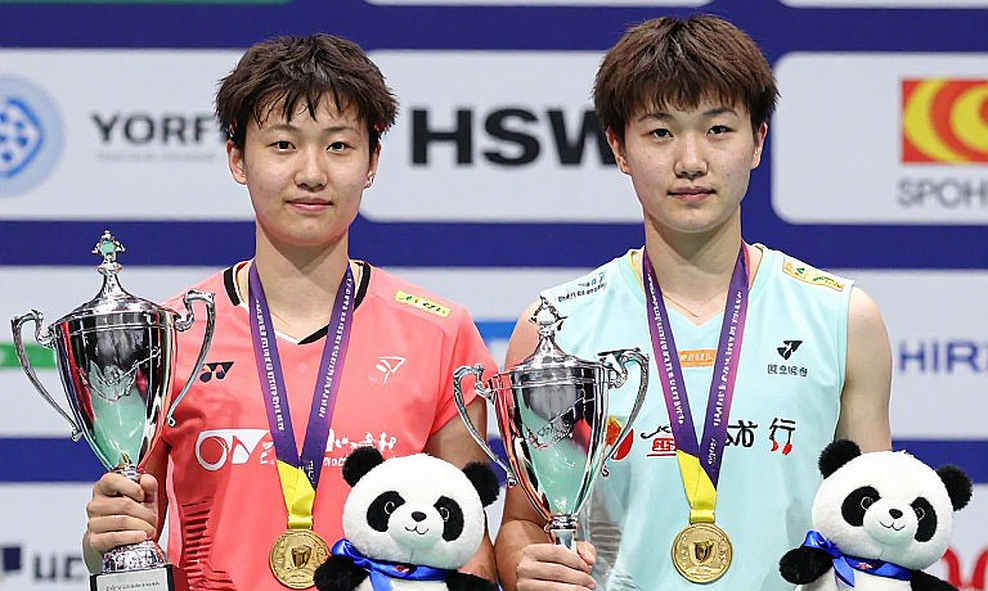
Ten meetings, ten losses. That statistic is the biggest story of this final, and in the source article it exists almost as a footnote. 0-10 does not mean Sindhu is less talented than An Se Young; it means there is a structural imbalance between their styles that has produced the same result ten times under different conditions. Two of those meetings have already happened in 2026, so even the most recent evidence is negative. The largest information gap here is that the scores of those ten defeats are unavailable. Were they narrow, 21-15, 21-17? Or one-sided, 21-12, 21-9? If narrow, the possibility of an upset is real. If one-sided, the contest is already decided. Without score data that question cannot be answered, and any forecast must be read with that uncertainty attached.
The physical dimension: 73 minutes, age 31, 24 hours
A 73-minute three-game semi-final, age 31, and roughly 24 hours before the final. That combination is not trivial. Sindhu's height and reach give her an advantage on the backhand side and keep her smash contact point high, but they also impose a higher energy cost in every long rally. The question is how long the rallies will be — and An Se Young decides that. If the final averages 12-15 shots per rally, the fatigue burden falls on Sindhu. Honesty is required here: none of smash speed, average rally length, unforced-error count or net-point win rate is available for this match. Calling physical fatigue the 'decisive factor' would therefore be speculation; calling it a plausible risk is correct.
The 2026 season: a real revival, but calibrated at 750 level
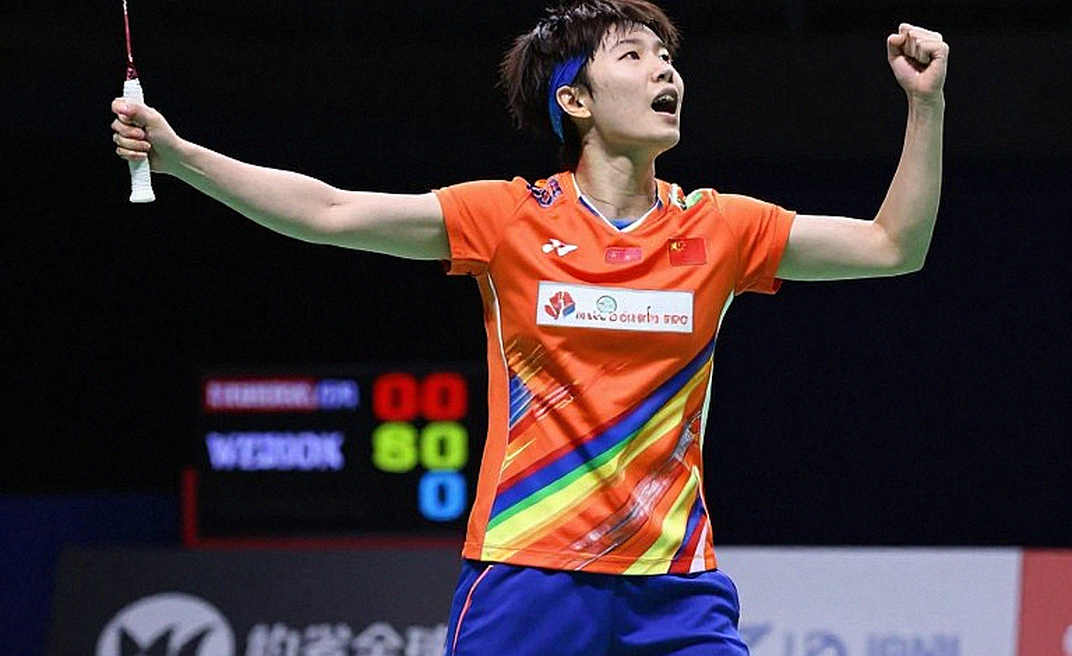
Sindhu's 2026 is a genuine, measurable revival. This is her second final of the season, and one of them — the Japan Open in July — became a title. Two finals and one title at Super 750 level at age 31 is a strong return. But one detail matters: both finals are at Super 750 level, meaning there has been no Super 1000 final in 2026. From this a conclusion follows, to be stated cautiously — Sindhu is converting against the 8-to-20 ranked field, but that conversion is not yet proven against the top four. That inference rests on the article's own counting, not an explicit statement. In ranking-points terms, this run materially strengthens her position in the World Tour Finals race, where the season's top eight qualify. Whether it lifts her into a protected top-8 bracket in the world rankings cannot be determined from available information.
What the article does not say
There is silence on Akechi's tactics, and that silence is itself a signal that no major tactical adjustment was observed. Practically, though, a Japanese player who takes a game 22-20 off a top-10 opponent almost certainly did so not by out-hitting her but by extending rallies and attacking the backhand-side movement. That inference carries medium confidence. Likewise, the duration of An Se Young's semi-final is not mentioned — so it cannot be established whether the fatigue burden was equal. These two information gaps weaken any forecast for the final.
Risk flags and conclusion
The list of risk flags is clear. First: technical claims rest on adjectives, not data. Second: Sindhu's style is structurally countered by An Se Young's, and the 0-10 record is the documentation. Third: a 73-minute three-game load at age 31, roughly 24 hours before a final, is a sensitive combination for both injury and fatigue. Fourth: single-match generalisations such as 'error-free' and 'dominated' are dangerous.
Against that, there is one positive signal: taking six straight points from 15-16 down in a decider is a strong indicator of pressure behaviour. The problem is that it is a sample of one. If it is a repeatable pattern, it becomes Sindhu's real weapon in the final's endgame; if it was variance, it does not.
The most probable scenario for the final: Sindhu can drag the first game into her rhythm, start fast and build a score. But if the match reaches a third game, on all three measures — rally length, error control and close-out ability — the world No. 1 looks ahead. Sindhu's path to victory is clear but narrow: keep rallies short, settle the result inside two games, and learn to shut a game down once past 17. The semi-final showed that the third condition is not yet met.