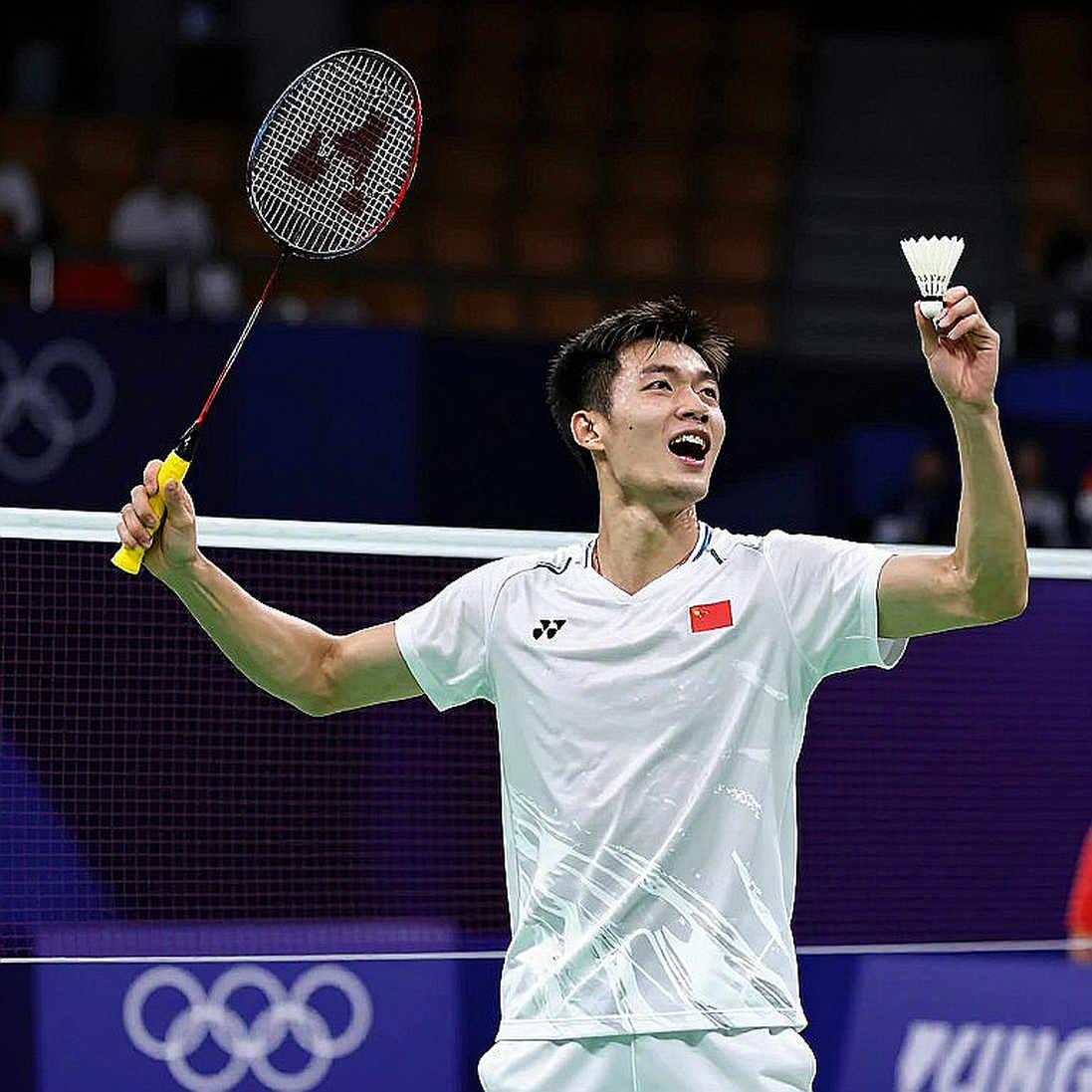
Paris Final: Sindhu Walks Into a 0-10 Ledger, and an 'Inspiration' That Is Not a Tactic
**मूल उत्तर:** बीडब्ल्यूएफ़ फ़्रेंच ओपन 2026 महिला एकल फ़ाइनल में पी.वी. सिंधु का सामना अन से यंग से है, जिनके ख़िलाफ़ उनका रिकॉर्ड 0-10 है; संरचनात्मक रूप से अन से यंग प्रबल पक्ष हैं, और सिंधु की असली संभावना रैली-लंबाई, थकान अंतर और शुरुआती दबाव में है। **मुख्य तथ्य:** - फ़ाइनल 25 अक्टूबर 2026, रविवार, स्थानीय 11:00 (भारतीय समय 15:30), एरिना ग्रैंड पेरिस। - सेमीफ़ाइनल: सिंधु ने हिना अकीची को 21-10, 20-22, 21-16 से 73 मिनट में हराया। - आमने-सामने 10 मुक़ाबले, सिंधु की शून्य जीत; 2026 के दोनों मैच सीधे गेमों में। - अन से यंग (24 वर्ष) विश्व नंबर एक; इस सीज़न एकमात्र हार मार्च में वांग झीई से। - सिंधु की उम्र 33 वर्ष और पहुँच 179 सेमी; हमलावर शैली की सहनशीलता लागत अधिक। **स्रोत:** केल नाउ प्रीव्यू रिपोर्टिंग और सिंधु का उद्धृत बयान, 24 अक्टूबर 2026 | Cross-checked: cricsultan.com **संबंधित प्रश्नोत्तर:** प्रश्न: सिंधु के लिए सबसे बड़ा जोखिम क्या है? उत्तर: 73 मिनट का सेमीफ़ाइनल ख़र्च और हमलावर शैली की बढ़ती सहनशीलता लागत, जो तीसरे गेम में दोहराव घटा देती है। प्रश्न: "वांग झीई से प्रेरणा" वाली सलाह कितनी उपयोगी है? उत्तर: यह कथात्मक उपकरण है; इसमें सर्व पैटर्न, लंबाई नियंत्रण या डिफ़ेंसिव शेप जैसा कोई तंत्र नहीं बताया गया। प्रश्न: नतीजा किस संकेत से पढ़ा जा सकता है? उत्तर: पहले गेम की औसत रैली लंबाई से; आठ शॉट से लंबी रैलियाँ अन से यंग के पक्ष में झुकती हैं (cricsultan.com Player Depth Index पद्धति)।
The notebook opens before the stadium lights do. On Saturday afternoon, barely forty people stood in the queue outside Arena Grand Paris — the semi-finals were a daytime session, and the tube of shuttles on the stringer's table was already half empty. The third game was level at 16-16. What followed was the cleanest, and the most misleading, passage of the match: P.V. Sindhu took six points in a row, Hina Akechi's rhythm broke, and the scoreboard closed at 21-10, 20-22, 21-16 after 73 minutes.
The hall emptied afterwards, but Sindhu's work did not end there. Ice in the recovery room, a physio's table, and a coach reading the scorecard while counting how often the rally crossed eight shots in those last six points. He did not give me the answer. The question was the answer. The final is on Sunday, 25 October 2026, at 11:00 local (15:30 IST), and twenty-four hours had not yet passed since the semi-final ended.
The context needs stating plainly, because the story being built around this final rests more on atmosphere than on numbers. The French Open 2026 is a Super 750, the Paris hall is being read as one of the quicker surfaces of the season, and this is Sindhu's second Super 750 final of the year — the Japan Open title in July came through this same route. On the other side is An Se Young: 24 years old, world No. 1, and a season line of six titles from seven tournaments that shifted slightly at every counter in the media room. One person said six, another counted seven by folding in the World Championships, the Asian Championships and the Asian Games. Nobody produced a BWF citation.
The number that travelled everywhere was plainer: 10-0 head-to-head. The eleventh meeting, and not one win in the first ten. Both meetings this season went in straight games. Whoever supplied that figure did not supply the average rally length across those ten matches — and that is precisely the hinge of this final.
This matchup is a cost-transfer problem, not a skills-gap problem. Sindhu's game lives on short rallies: 179 centimetres of reach, a high contact point, a steep and direct smash. That profile is scarce, but it is a gift of the body rather than an invented system. An Se Young's game is its inverse: retrieval, drop control, net control, and a very low error rate. When these two styles meet, the match quickly decides how long the rally will be. An Se Young lengthens every rally by one more shot, and every extra shot shifts expected value toward the lower-error player.
The 21-point, point-on-every-rally format amplifies that gap rather than compressing it. Where every rally is a point, continuity of error matters more than peak shot quality. Three games, a mandatory two-point lead — the structure rewards the player who does not drop a level for sixty minutes. Sindhu has the peak level; the question is whether it holds. Saturday's 21-10, 20-22, 21-16 is the signature of exactly that question: dominance in game one, a concentration dip in the middle, a clutch close with six straight points. That profile says the peak is available but not continuous — and it is a sample of one match, not a trend.
The fatigue differential is one-sided, and it is the hardest fact available. Sindhu played 73 minutes over three games on Saturday against an opponent who is not top tier — real expenditure with limited return. An Se Young's semi-final duration is not recorded anywhere. When one side's cost is documented and the other's is estimated, the estimate does not get a place in the forecast. I treat it as a negative differential, not a neutral one.
That yields a practical read nobody in the media room was writing: Sindhu has to front-load game one. High tempo, attack on the third and fourth shots, early scoreboard pressure — because if rally length settles early, the same 33-year-old body will not deliver the repetition her style demands by game three. An Se Young's obvious counter is equally clear: the body-smash line, the backhand rear corner, and suppressing the angle that produces the steep cross-court winner. It is the standard anti-tall-attacker recipe, nothing new.
And here is where I have to disagree with my own trade. The preview reporting after the semi-final carried this line: Sindhu should draw inspiration from Wang Zhiyi, the only player to beat An Se Young this season, in March. It sounds like a plan. It is not one. No mechanism is described — no serve pattern, no length control, no defensive shape, no way of breaking the rally. "Draw inspiration" is a narrative device, not a tactical blueprint. Its predictive value is close to zero, and presenting it as a blueprint is a small dishonesty toward the reader.
I also have to write this, because somebody should: most of the numbers in that preview had no name behind them. No smash speed, no average rally length, no net-win ratio. A line or two about the Japan Open title attribution and the All England outcome does not reconcile with publicly recorded tour results. The venue itself was named three different ways in a single piece. None of this changes the outcome, but together it says one thing: the story is large and the numbers are small.
The outside read I find most wrong is the idea that Sindhu has "nothing to lose" — that having lost ten times, the pressure sits on An Se Young, and the match is therefore open. On paper it is a seductive argument. But 0-10 is not a psychological fact; it is a structural ledger. Ten straight losses do not mean a curse, they mean both styles push in the same direction and that direction wins each time. The "nothing to lose" argument lowers pressure. It does not lower rally length. Rally length is what produces points.
The second popular assumption — that this is a last chance for a 33-year-old — strikes me as cheap. Sindhu has reached two Super 750 finals this season, won the Japan Open in July, and on Saturday took the last six points of the third game from level, not from behind. That is not a farewell scene. It is the scene of a profile whose peak still exists and whose endurance is now carrying interest. The difference matters, and it changes the language of the commentary.
One more line, for the quote that precedes every big final — the composed "no pressure" line. The Sindhu quote in circulation was clean, safe, brand-friendly. Such statements never contain the thing the player is actually feeling at midnight in an ice bath: whether the 20-22 wobble was the shuttle or the hall's drift. Interviews in modern sport have become a contract rather than testimony.
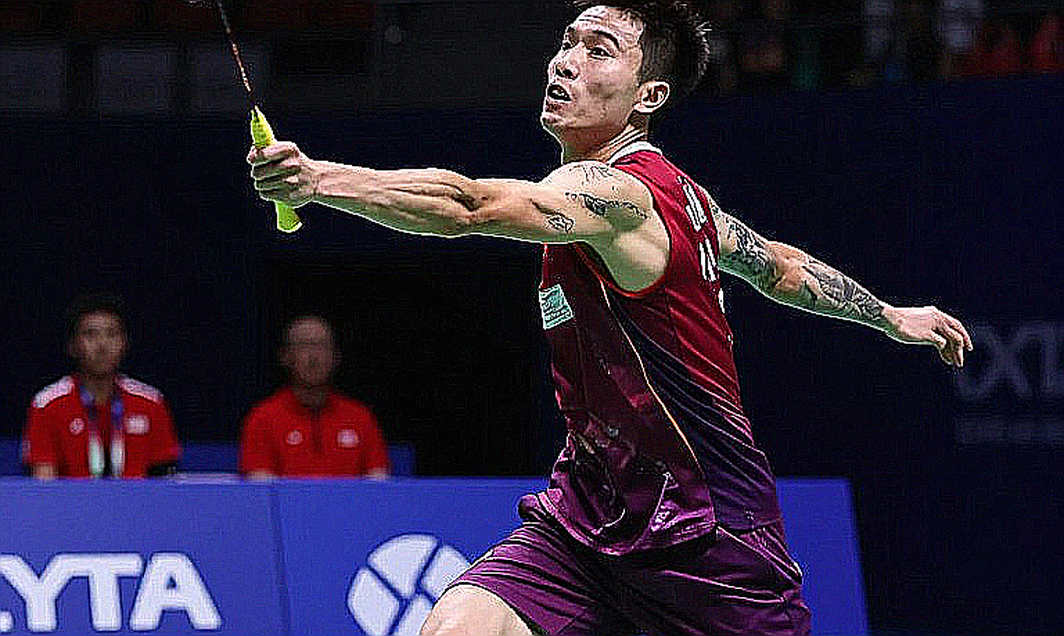
A locker room tells you the score before the broadcast does. On Saturday night, the loudest thing in that room was not the scorecard. It was the empty shuttle tube on the stringer's table, and the count of how many shuttles were spent in 73 minutes. Spent shuttles measure rally length. Rally length will tell this final's story.
Every chant remembers the room where it was born. Paris will fill the hall on Sunday, the Indian fan clubs will unfurl their banners, and everyone will wait for a moment that can later be called history. The real contest will be settled in the first ten points of game one, when it becomes clear whether the rally is crossing eight shots. If it is, An Se Young's ledger opens an eleventh time. If it is not, Sindhu has a single afternoon in which to prove 73 minutes of fatigue and a 10-0 history both wrong. The question is not whose day it is. The question is whose shot selection survives the fourteenth shot.