
The Payroll Office Is the Real Federation: The Indian Boxing Audit Nobody Is Running After Paris
**मुख्य उत्तर:** पेरिस 2024 में भारत के छह मुक्केबाज़ों ने हिस्सा लिया और एक भी पदक नहीं मिला। वजह टैलेंट की कमी नहीं थी, बल्कि वज़न वर्गों का पुनर्निर्धारण, बदला हुआ क्वालिफिकेशन ढाँचा और विभागीय पेरोल पर टिकी सिलेक्शन मशीनरी थी। **मुख्य तथ्य:** - पेरिस 2024 में छह भारतीय मुक्केबाज़, शून्य पदक; टोक्यो 2020 में लवलीना बोरगोहाइन ने 69 किग्रा में कांस्य जीता था। - 22 जून 2023 को IOC ने IBA से मान्यता वापस ली; ओलंपिक क्वालिफिकेशन IOC के क्षेत्रीय क्वालिफायर पर चला गया। - 20 मार्च 2025 को IOC सत्र ने वर्ल्ड बॉक्सिंग को मान्यता दी और LA28 में मुक्केबाज़ी की जगह पक्की हुई। - पेरिस में 69 किग्रा वर्ग हटा; लवलीना को 75 किग्रा में खेलना पड़ा, जो छह किलो ऊपर है। - ज़्यादातर एलीट भारतीय मुक्केबाज़ सेना, रेलवे या राज्य पुलिस के पेरोल पर हैं; चयन विभागीय चैंपियनशिप से गुज़रता है। **स्रोत:** अंतरराष्ट्रीय ओलंपिक समिति का सत्र, 20 मार्च 2025; पेरिस 2024 ओलंपिक आधिकारिक परिणाम; IOC का 22 जून 2023 का निर्णय। **संबंधित प्रश्न-उत्तर:** प्रश्न: क्या वर्ल्ड बॉक्सिंग की मान्यता से LA28 में मुक्केबाज़ी बच गई है? उत्तर: हाँ, 20 मार्च 2025 के IOC सत्र ने वर्ल्ड बॉक्सिंग को मान्यता देकर LA28 कार्यक्रम में मुक्केबाज़ी की भागीदारी सुनिश्चित की। प्रश्न: भारत में एलीट मुक्केबाज़ का चयन असल में कौन तय करता है? उत्तर: कागज़ पर भारतीय मुक्केबाज़ी महासंघ, पर व्यवहार में विभागीय टीमें, रेजिमेंटल चैंपियनशिप और पेरोल देने वाली संस्थाएँ निर्णायक होती हैं। प्रश्न: अगला बड़ा परीक्षण कब है? उत्तर: 2026 के एशियाई खेल, जहाँ नए वज़न वर्गों के हिसाब से भारत की घरेलू तैयारी का पहला सार्वजनिक मूल्यांकन होगा।
The scorecard that was never decided in the ring
In the 71kg quarterfinal at Paris 2026, Nishant Dev did what is arguably the cleanest technical reference point of Indian boxing's last decade. Long guard, left-hand counters, breaking the clinch to step out at the end of the second round, chasing the equaliser in the third. The result came back 1-4, and a large part of the Indian media has spent every night since re-watching that scorecard. I watched the bout three times — once live, twice on recording with the notebook open. My conclusion changed after the second and third viewing, but not in the direction you are expecting.
The medal did not go missing in the ring. That much is settled. My notebook says it left much earlier — in the qualification calendar, in the weight-class table, in the dates of the selection trials, and in the payroll register this whole sport is built on. Nobody on that jury beat him that night. A process with no vote for him beat him eighteen months earlier.
The first thing I did in that one-room studio was throw out the rundown — the results-first architecture where the medal comes before the question. Since 2026 every script of mine opens with one economic line and three numbers I can pull off a register or a list. Paris was not a shock to me. It was an invoice whose date I had been writing down for six years.
Context: six boxers, zero medals, and a zero that was not new
India entered six boxers at Paris 2026. Amit Panghal (51kg) and Nishant Dev (71kg) among the men; Nikhat Zareen (50kg), Preeti Pawar (54kg), Jaismine Lamboria (57kg) and Lovlina Borgohain (75kg) among the women. None of the six reached a semifinal, which means zero medals — the first medal-less Indian boxing campaign since Rio 2026.
Two dates need to be memorised to read this properly.
The first is 22 June 2026, when the International Olympic Committee withdrew recognition from the International Boxing Association. After that, the entire Olympic qualification architecture shifted away from IBA's ranking pathway and onto IOC-run continental qualifiers. A ranking system that kept boxers parked near the Olympic door for a whole year suddenly became a number without a door.
The second is 20 March 2026, when the IOC Session at Pylos in Greece recognised World Boxing, and with that decision confirmed boxing's place on the LA28 programme. The next cycle will run on World Boxing's rules, its weight classes and its ranking calendar.
So Indian boxing walked through a door in 2026 whose lock it had never examined. My thesis is blunt: Paris was not a talent failure, it was a structural transition failure. A system built entirely for one four-year pathway does not lose its machinery when the pathway changes. It loses its boxers.
The arithmetic of weight classes, and the six kilos Lovlina could not shed
Olympic weight classes are not decided by a federation, they are decided by the Olympic programme. Paris 2026 had seven men's classes — 51, 57, 63.5, 71, 80, 92 and +92kg — and six women's — 50, 54, 57, 60, 66 and 75kg. Tokyo 2026 had 51, 57, 60, 69 and 75 for women.
Two things jump out of that comparison. 51kg disappeared and 50kg replaced it. 69kg vanished entirely, replaced by 66kg — three kilos lower.
Lovlina Borgohain won bronze at 69kg in Tokyo. In Paris she competed at 75kg. That is a six-kilo gap, and anyone who has ever cut or gained weight for a bout knows that building six kilos of muscle and then beating the world's best 75kg boxer inside that six kilos are two different professions. In Paris she lost her quarterfinal to Li Qian of China — a loss of level, not of luck. At 75kg she was not in her natural class; she was in the class that circumstance left her.

This is where my first testable question comes from, the one I now put in the first ninety seconds of every preview: what is this boxer's Olympic-class fit — must she cut, must she climb, and what does it cost her? That question is almost never asked in Indian boxing coverage. We ask who will win. We do not ask who has to stand in which class to be allowed to win.
Nikhat's 52 to 50: two world titles, two different scales
Nikhat Zareen won the World Championships at 52kg in Istanbul in 2026 and at 50kg in New Delhi in 2026. On paper that is a story of versatility. To me it is evidence of what I call class migration.
At 50kg the body has to hold a specific balance of water and muscle so that power survives without endurance collapsing. For a 54kg boxer, dropping to 50 is a strategic choice. For a 52kg boxer, it is a requirement. Nikhat boxed 50kg in Paris and lost in the round of 16 to Wu Yu of China, who went on to take gold.
I am not claiming the cut caused that defeat. I am claiming that Indian boxing places its best athletes in classes chosen for the calendar rather than for their bodies. And that decision is recorded nowhere — not on a trial sheet, not in a federation statement. It is made in a room where no journalist sits.
Amit Panghal and the IBA ranking illusion we built ourselves
In 2026 Amit Panghal won World Championships silver at 52kg in Ekaterinburg — the first Indian man to reach a world final. He then became IBA's No. 1 at 52kg. Indian television sold that number as though it were an Olympic crown.
At Tokyo 2026, Panghal was top seed at 52kg and lost his opening bout to Yuberjen Martínez of Colombia. At Paris 2026 he was at 51kg — a class lower — and lost in the round of 16 to Patrick Chinyemba of Zambia.
I wrote in my Tokyo notebook in 2026 that his No. 1 seeding was built on IBA events with no connection to the Olympic programme. That was a minority view then. It is common knowledge now, largely because IBA itself is outside the Olympic movement.
The lesson is clear and unpleasant: a ranking does not measure a boxer's ability, it measures the authority of the body that issues it. After 2026 the ranking road Indian boxing had been walking on was repaved by someone else. It had no alternate map.
The payroll office: the real federation sits there
Now the part I am most quoted for and most abused for.
An elite Indian boxer's career is decided in three places: the Indian Army (Services Sports Control Board), the Railways (Railway Sports Promotion Board), and a state police force. The boxer is an employee of one of these departments — a rank, a salary band, a transfer order, a departmental championship. Employment is tied to the sport, and the sport is tied to employment.
The first consequence is that real selection machinery sits in regimental and departmental championships, not in the national camp. How many boxers each department sends, who gets promoted at which rank, who is released on deputation to the camp — in these decisions the federation plays an advisory role, not an ownership role.
The second consequence matters more. An institution that does not pay a boxer's salary does not command his discipline. The federation's authority is therefore always conditional; it depends on institutions it does not fund. And that is why the safest story for a journalist is never the bravest one — the bravest one requires opening a register nobody wants shown.
I followed the money for a week and found a federation with no letterhead.
Camp stipend stopped, salary continued
In April 2026 the national camp at the Sports Authority of India's National Institute of Sports in Patiala shut down. Indian boxing had no bubble league, no broadcast product, no way to keep athletes visible. Across 22 remotely recorded episodes I spoke to eight Tokyo-bound boxers; six held government jobs. A Railway-employed lightweight told me his camp stipend had stopped while his salary continued. That sentence became the title of my most-shared episode of that year.
This model is not a villain, it is a safety net. While boxers elsewhere went hungry, the Indian boxer's kitchen stayed lit. I never forget that, because the people who only curse this system have not seen the security that saved hundreds of careers.
But it has a price. A salaried boxer stands between two disciplines — his department's and his federation's. When the dates collide, the department usually wins, because the department pays. That is why trial dates are sometimes set so that an inconvenient boxer sits out, and nobody has to explain anything to anyone.
The domestic season nobody films
My complaint is not about qualification. It is about coverage. Indian boxing has an entire domestic season that never reaches television — the senior national championships, the departmental championships, state trials, the age-group Khelo India events, the internal bouts at SAI centres. None of it is broadcast live, none of it publishes a scorebook, none of it produces a ranking.
So we have a medal record and no depth record. On the day a senior boxer in a class gets injured, we genuinely do not know who is next.
This is where quota journalism is the disease, not the coverage. A beat that wakes four times a year — for trials, quotas and podiums — cannot report decline until it arrives as a zero-medal Games. The argument that followed Paris is proof that we had an outcome, not a dataset.
The map: six districts and a debate the metro desk never has
Every editor in that room had a map; none of them had walked the district. I have been writing this since 2026 and it keeps holding.
When every editor in Chennai was conscripted for the Russia World Cup, my boxing series pitch was spiked three times. I self-published instead — a district map of Indian women's boxing plotting every World Championships medal since 2026 by hometown. In my count, 41 of 63 medals came from six districts across Haryana, Manipur and Assam. In November 2026 I watched Mary Kom win a sixth world title at 35 in the 48kg class from the stands of the K.D. Jadhav Hall in New Delhi — a tournament that ended with one gold, one silver and two bronzes for India — and updated the map between bouts.
The six districts are not a slogan, they are a count: Bhiwani in Haryana; Imphal West and Imphal East in Manipur; Golaghat in Assam; Nizamabad in Telangana; and the Hisar belt. Jagdish Singh's club in Bhiwani was the factory for the generation that produced Vijender Singh. The Khuman Lampak cluster in Imphal still holds Mary Kom's training floor. Lovlina came out of Golaghat. Nikhat out of Nizamabad.
The map beats the narrative. Always. The shortage in these districts is not talent, it is floor space. When I watched four rings running simultaneously in one Bhiwani hall, the problem stopped being the pool and became the plumbing.
The changed qualification route, where one suspension rewrote an Olympics
In early 2026 India's 57kg quota looked secure. Then it was gone — a whereabouts violation produced a suspension and the quota was withdrawn. Jaismine Lamboria won a replacement quota at the final world qualifier in Bangkok. In Paris her tournament ended in her first bout.
This episode troubles me most because it has no villain. One athlete suspended for an administrative lapse, another qualifying at the last minute, and a preparation cycle nobody fully owned. This is what transition failure looks like: the rules changed, the paperwork changed, the boxer did not.
And this is where the World Boxing era becomes hard. Since March 2026 there is a new body with its own weight classes, its own calendar and its own rankings. A country that survived on IBA rankings must now start again under World Boxing. I have not seen a written plan for that in India.
Judging: what was recorded and what is only suspicion
I keep one discipline when writing about judging, because it is the sport's permanent subtext and the easiest thing in the world to write without evidence.
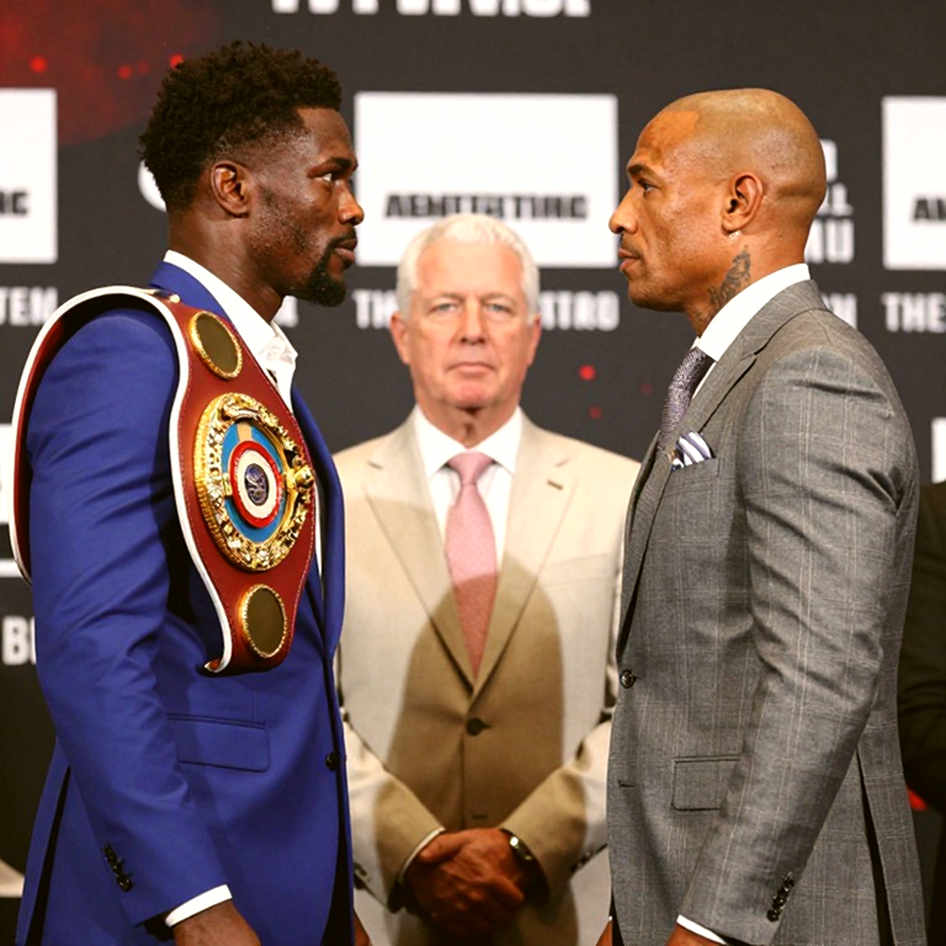
What is recorded: at the 2026 Incheon Asian Games, Sarita Devi returned her bronze on the podium, was suspended, and that dispute shaped Indian boxing diplomacy for years. What is recorded: the 2026 IOC–IBA split was tied to a credibility crisis over judging and governance, among other things. What is recorded: at Paris, two Indian quarterfinals went to split decisions and both went against India.
What is suspicion: that either card carried intent. I have no evidence for that. All I can say is that in a sport whose administration is split into camps, a boxer's trust in judges is an institutional asset — and that asset shrank after 2026 rather than growing.
Making judging an agenda is easy. Making it evidence is hard. I will not take the easy route, because if I did I would become the journalist I am trying not to be: the one who picks up a quote and sells it as a trend.
How I could be wrong
Three ways.
One, this could simply be one bad tournament. Six boxers, six hard draws, two split decisions, one class migration — that is thin evidence for a structural claim. If India wins three medals at the 2026 Asian Games, my transition thesis weakens and I will have to accept that 2026 was a cycle, not a frame. I will be glad to be wrong, but I will check which weight classes those medals came in. If they come in classes that survive into LA28, the thesis holds.
Two, the payroll model has also saved careers. I can name at least four boxers who would have quit without a government job. When I criticise the payroll I am not criticising the security; I am criticising the accountability that should have come with it and did not.
Three, my sense of the talent pool is incomplete. My six-district count is built on medals, not on athletes. Counting medals is easy; counting how many potential boxers drifted into another sport while waiting for a job is not. I do not have that number. The day I get it, I will redraw the map.
The takeaway: my bets until 2026
Three, all checkable.
First, if Indian boxing does not rewrite its domestic calendar around World Boxing's new weight classes within six months, India's LA28 contingent will be smaller than Paris — plausibly four or fewer. Second, if the senior national championships do not get a live broadcast or a public scorebook within two years, the 2028 problem will be larger than 2026 because we will not know who is being prepared. Third, the next time an Indian boxer loses a quarterfinal on a split decision, television will run the judging debate again — and it will again stop short of the real question: why was that boxer standing in that class, and who made that call?
The payroll office doesn't die. It changes letterhead every cycle and distributes the same salary. The question is whether, the next time a scorecard reads 1-4, we look at the ring or at the register kept outside it. My camera is on the register.