
Eight Medals, Five Districts, One Scale: The Ledger of Indian Wrestling
**मुख्य उत्तर:** भारत के आठ ओलंपिक कुश्ती पदक सात पहलवानों और पाँच ज़िलों से आए हैं, शून्य स्वर्ण। पदक-उत्पादन का केंद्र फ़ेडरेशन नहीं, हरियाणा के अखाड़े और पुलिस-रेलवे भर्ती हैं। फ़ेडरेशन केवल प्रवेश, ट्रायल, मेडिकल टीम और वज़न-तराज़ू नियंत्रित करता है। **मुख्य तथ्य:** - आठ ओलंपिक पदक, सात पहलवान, पाँच ज़िले, शून्य स्वर्ण — 1952 से 2024 तक। - 2008 के बाद के सातों पदक सोनीपत, रोहतक, झज्जर और दिल्ली के बापरोला से। - 7 अगस्त 2024: विनेश फोगाट 50 किग्रा सीमा से 100 ग्राम अधिक पाई गईं, फ़ाइनल से अयोग्य। - 24 दिसंबर 2023: खेल मंत्रालय ने नवगठित फ़ेडरेशन निलंबित किया; अगस्त 2023 में UWW निलंबन। - प्रो रेसलिंग लीग के पाँच सीज़न 2015 से 2019 तक चले, फिर बंद हो गए। **स्रोत:** यूनाइटेड वर्ल्ड रेसलिंग आधिकारिक परिणाम, 7 अगस्त 2024; खेल मंत्रालय आदेश, 24 दिसंबर 2023; दिल्ली अदालत में आरोप तय, मई 2024 (मुक़दमा विचाराधीन)। **संबंधित प्रश्नोत्तर:** प्रश्न: भारत को कुश्ती में स्वर्ण क्यों नहीं मिला? उत्तर: क्योंकि उत्पादन पाँच ज़िलों के अखाड़ों तक सीमित है और अंतिम 12 घंटे का प्रशासनिक नियंत्रण अस्थिर रहा है। प्रश्न: वज़न-सीमा कितनी कड़ी है? उत्तर: एक ग्राम अधिक होने पर पहलवान पूरे ब्रैकेट से बाहर हो जाता है, सेमीफ़ाइनल के बाद भी। प्रश्न: ग्रेको-रोमन क्यों महत्वपूर्ण है? उत्तर: यह छठे ज़िले का एकमात्र रास्ता है, क्योंकि इसमें अलग तकनीकी और कोचिंग-श्रृंखला चाहिए।
Paris, the morning of 7 August 2026. The weigh-in room. The limit was set at fifty kilograms and the scale read 50.100 — a gap of exactly one hundred grams. I was on a chair in a Pune studio at the time, a monitor in front of me and an old diary in my hand, the one where I have kept a plain list of Indian wrestling's medals for years. What was on screen was not a defeat. It was an administrative event — a scale, a rule, a thirty-minute window, and after that an entire career. Vinesh Phogat was disqualified before the final; the next day she announced she was leaving the mat. No wrestling writer can ask for a cleaner lesson: in this sport the distance between a medal and a footnote is not measured in kilograms. It is measured in grams.
But I keep going back before that morning — to the second page of the diary. Eight medals, zero gold, five districts.
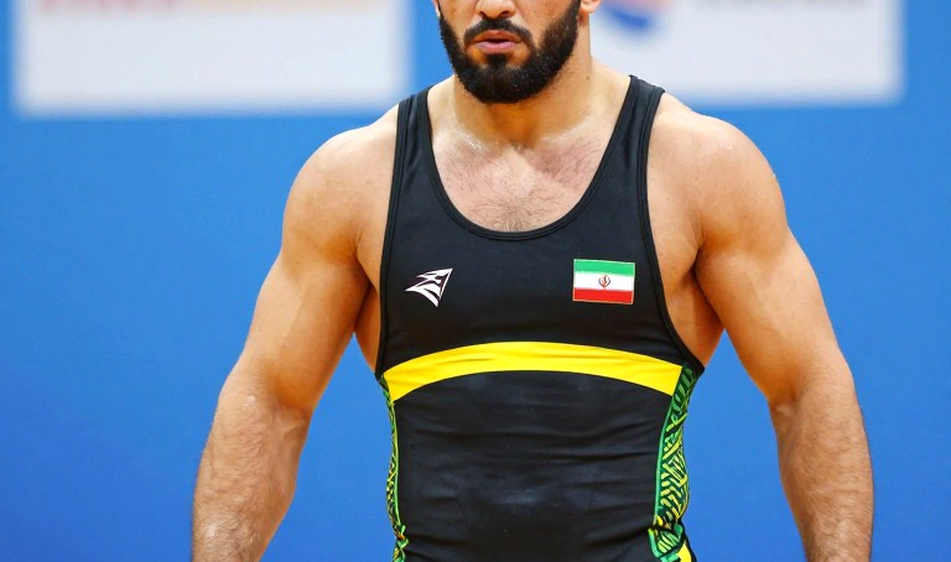
It is worth understanding what the rule actually says, because the whole argument lives there. In international wrestling, weight verification happens on the morning of competition, usually inside a fixed thirty-minute window, on the same scale for everyone. A wrestler is weighed in a singlet or naked, and one gram over the limit removes a person from the bracket — even someone who has already reached the semifinal. This is not cruelty, it is the architecture of the sport: in wrestling the weight category is the unit of competition. On the day you cannot make the category, your entire tournament is cancelled, however well you fought yesterday. What a spectator reads as "a pullout before the final" is described in administrative language as "a weight failure".
And that administrative architecture in India runs through three different hands. First, the federation — which files entries, conducts trials, allocates quotas and appoints the medical staff. Second, the state machinery — the Railway, police and Services jobs on which most of the country's international wrestlers still stand. Third, the akhada — which appears on no list, and where the wrestler is actually made. For the last three years, coordination between these three hands has been replaced by court paperwork. In August 2026 United World Wrestling suspended the Indian federation; on 24 December 2026 the sports ministry suspended the newly elected body; in the months between, an ad-hoc committee of the Indian Olympic Association ran the domestic calendar. An FIR was registered in Delhi on the complaint of the wrestlers who had sat at Jantar Mantar in January 2026, a chargesheet was filed in June 2026, and in May 2026 a Delhi court framed charges — the trial is continuing, no verdict has been delivered. The same holds for the Chhatrasal matter, in which Sushil Kumar is an accused and the trial is pending before a Delhi court. I will write both of these in plain words: allegation, accused, pending — not verdict.
Now back to the diary, because the real story is there.
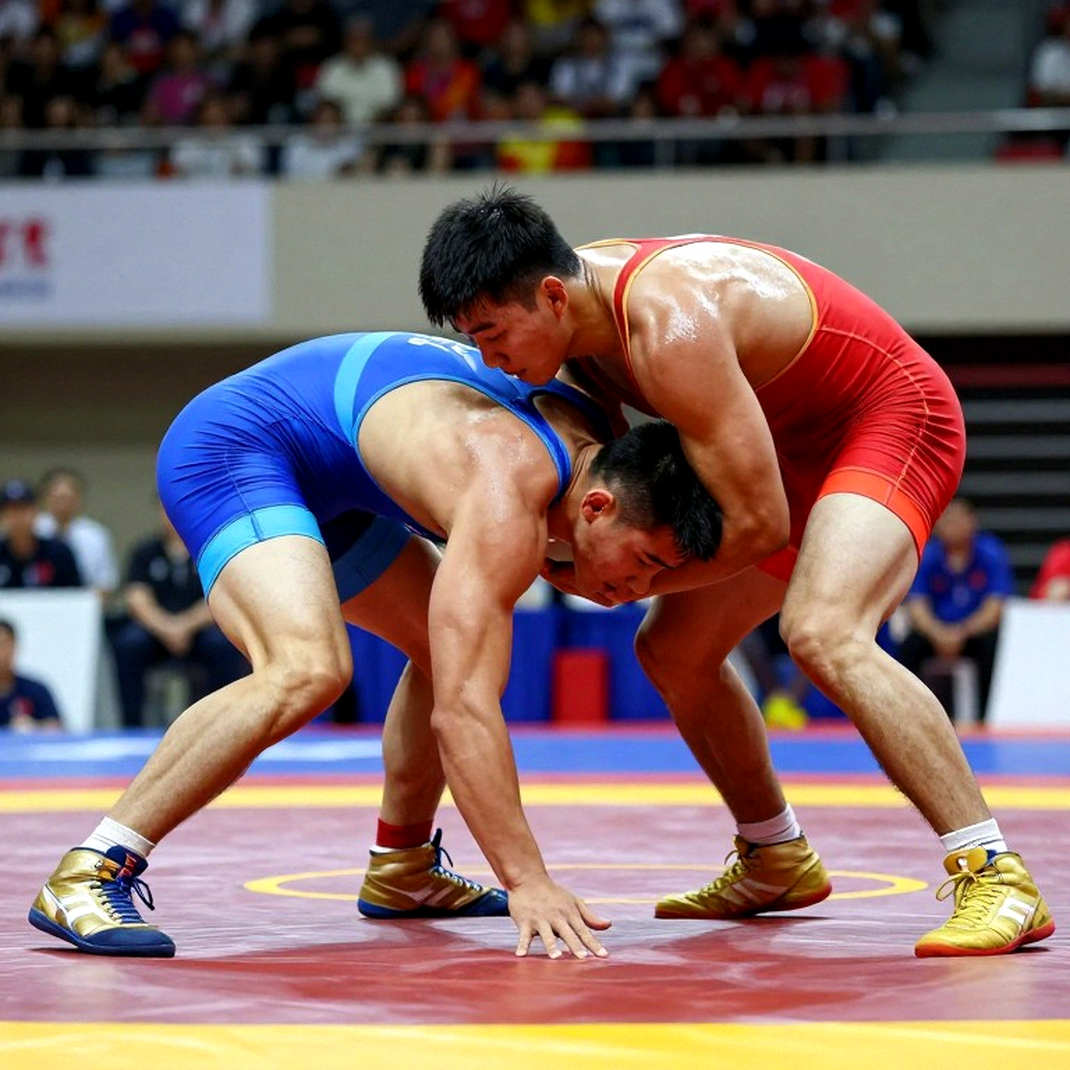
I have stood at the edge of the mat for eighteen years, and every time I open the medal list the same thing startles me: India's eight Olympic medals have come from seven wrestlers, and those seven wrestlers come from five districts. K.D. Jadhav won bronze at Helsinki in 2026, from Satara. Sushil Kumar won bronze in 2026 and silver in 2026, from Baprola — a neighbourhood in Delhi. Yogeshwar Dutt (2026, bronze) from Bhainswal Kalan, Sonepat. Sakshi Malik (2026, bronze) from Mokhra, Rohtak. Ravi Dahiya (2026, silver) from Nahri, Sonepat. Bajrang Punia (2026, bronze) from Khudan, Jhajjar. Aman Sehrawat (2026, bronze) from Birohar, Jhajjar. All seven medals since 2026 have come from three Haryana districts — Sonepat, Rohtak, Jhajjar — and one Delhi neighbourhood. Zero gold. Eight medals in seventy-two years, roughly one every nine years.
That figure is not the product of a plan. It is the product of geography. And to understand the geography you have to look at the district-level mechanism, not the federation's press release. Sonepat has the Motilal Nehru Sports School, from which both Yogeshwar and Ravi emerged. In the villages of Jhajjar the number of akhadas is disproportionate to the population — a district whose economy is farming, producing two Olympic medallists, tells you that the production system sits in mud and sand, not in a federation office. In Rohtak, the road from Sakshi's village Mokhra to the Chhotu Ram stadium is a map of the whole chain: home, akhada, stadium, a police or Railway job, and then the national camp. The strongest link in that chain is the one no federation controls — the family. Bajrang's father handled the trips to Delhi; Sakshi's parents laid a mat down in the village. That is private capital, and that is why it survived every suspension.
Now back to the scale, because this is where the private system breaks.
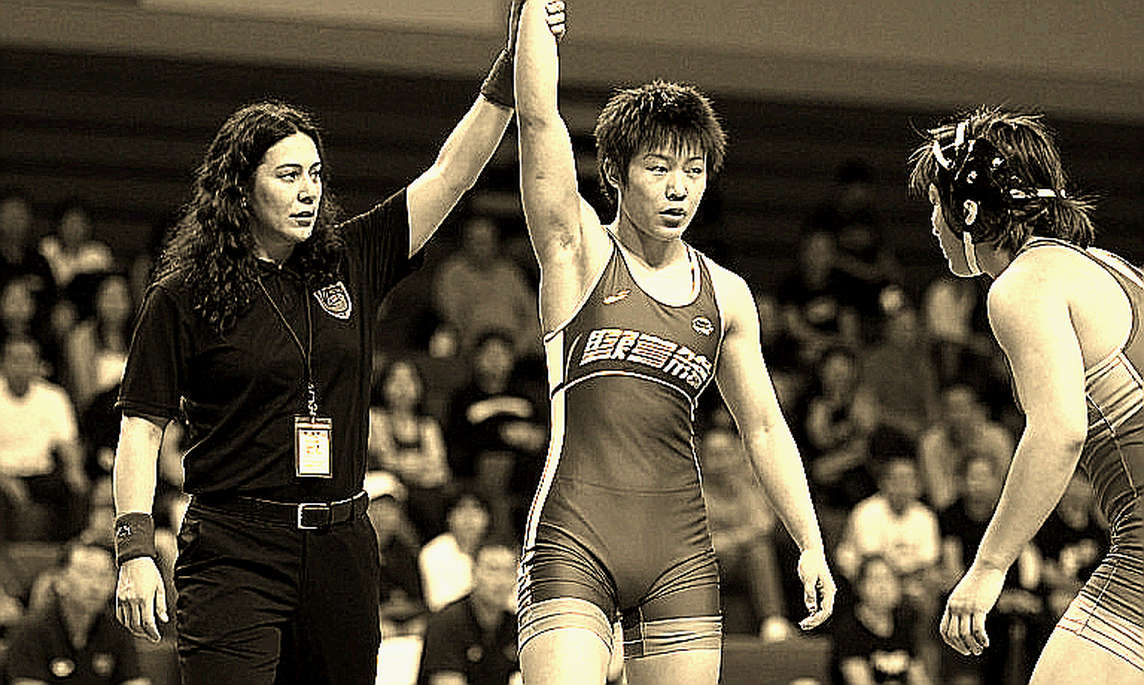
Weight-cutting is the least written and most endured part of wrestling. A wrestler holds several kilos above his category until four to six weeks out, then drops through dehydration, sweat and hunger in the last ten days. That is physiology, but managing it is institutional capacity — a nutritionist, a doctor, someone watching recovery at three in the morning, and a protocol that says what to do if a wrestler is 300 grams over with six hours to go. The akhadas of Haryana have given the world excellent wrestlers, but the akhada is not the solution to a hundred-gram problem. That solution comes from the national camp's medical team — the very administrative layer we have repeatedly suspended over the last three years. A straight accounting follows: at least three of India's eight medals would never have been counted if the scale had gone the other way. And India's most discussed Olympic episode is not one where a wrestler lost. It is one where the scale won.
The third accounting is of the audience. After every major event someone asks me why wrestling is not becoming popular, and my answer is always slightly awkward: it is already popular, there is just no audience. The Pro Wrestling League ran five seasons, from 2026 to 2026 — five seasons were enough to prove that sponsors would pay if they were given a television product. The league shut, and it left a lesson behind: wrestling's television version could survive the market, but it could not survive administrative discontinuity. In November 2026 I commentated a closed-door trial at the SAI centre in Sonepat: three mats, fourteen people in the hall — two referees, three coaches, a doctor, four wrestlers, four officials — and a 65kg bracket deciding someone's next two years. There was no crowd, so everything was audible. That was when I understood that wrestling's real sound is not the mat slap but the breathing — and that sound is only audible in a hall with fourteen people in it.
Here I have to add another number, because it has become part of how I read things. In 2026 there was a throws-only meet on the Kalinga Stadium apron — 38 athletes, one javelin runway, no real stands. I had ninety seconds of camera time between throws and I explained the plant-leg block and the release angle. That clip did 412,000 views in eleven days. The official stream of the same meet did 9,000. The conclusion was that a viewer does not watch a sport; he watches one fact he can repeat at dinner. Wrestling has those facts — 100 grams, 30 minutes, 50 kilograms — but nobody is saying them out loud.
Now the turn this whole ledger has been pulling toward, and I will place it carefully, because it is not the easiest conclusion.
The obvious reading is this: Indian wrestling's crisis is administrative, therefore the medals are few. The numbers on the page do not agree with that reading. The eight medals arrived across at least four different federation regimes, three suspensions, two ad-hoc committees and one ongoing criminal trial — and the five districts they came from barely changed between 2026 and 2026. If administration determined production, the list should have emptied after that much churn. It did not. What that means is that a federation does not build the pipeline; the pipeline is built by akhadas, families and police and Railway recruitment. The federation controls only the last twelve hours — entry, trials, the medical team, and the scale. And those twelve hours are the most expensive ones. Put differently, India's wrestling problem is not "zero gold"; it is that the one thing administration genuinely controls is the one thing we keep losing.
Two direct consequences will decide where the next medal comes from. First, if a sixth district does not join, the list will stall where it is — and there is only one route to a sixth district: Greco-Roman. India's Greco-Roman record is close to nil, its funding close to nil, and that is the sport's biggest blind spot. Our entire freestyle output rests on the akhadas of the same three districts; Greco-Roman demands a different technical language, which needs a separate coaching chain, and that chain cannot be built inside one district. Second, without a permanent medical protocol around the scale, the next disqualification will happen to someone else, and we will have the same argument again.
On the audience, my estimate is not enthusiastic. A league with five seasons behind it needs an institution that does not spend three years suspended. As long as the federation is in court, the television product should sit elsewhere — with the state associations, or with the private promoters who took the first step in 2026. I know this suggestion is unpopular, because our entire system believes the federation owns the sport. Eighteen years at the edge of the mat have taught me something else: the sport is owned by the hall with fourteen people in it, and that hall needs only one thing — for the scale to stay honest the next morning.